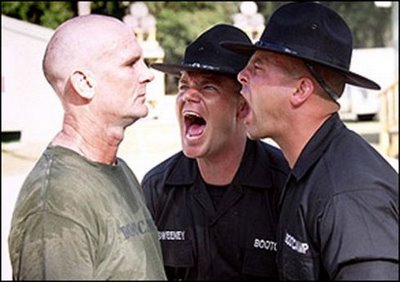
Church Plant Boot Camp Pt. 1

I drove into Richmond, Virginia on Monday night to attend the Virginia Conference Church Plant Boot Camp with Jim Griffith of Griffithcoaching.com.  There are people here from all over Virginia, Eastern Pa, Wisconsin, New England, Ohio, North Carolina, and Minnesota. While I came by myself (short notice), there are many teams here from church plants in the UMC.

The first day of workshops consisted of The 10 Most Common Mistakes a New Start Makes, Self-Care, Creating Mission Alignment, and some nuts and bolts stuff about creating a good first impression.  The first few session were pretty good– with some good thoughts on them.  The 1st impressions sessions was decent, nothing groundbreaking, but it came out of order.  The coaches have talk repreatedly that a major reason a new start fails is because of a premature launch…which made it intersting when we discussed the nuts and bolts of how to do a full fledge worship gathering before discussion the when and how of developing a launch team and plan.

The second day focused a lot of how to determine your public launch timeline.  There were a couple of bombs today.  First, the presenters said that critical mass to reach before a public launch is 149.  They believed that this was an important number because it is big enough where the pastor will need other leaders to hand off responsibility to….and that it creates more momentum.  My guess for “critical mass” was 75-100.  When we began the H2O Gathering at Avenue UMC, our first Sunday was 91 and we rarely dipped below that in the first few weeks. 

I have one more day left of the boot camp and I will post some more thoughts in the following days.


Posted in Leadership | Leave a comment

How We Do Ministry

We had our first Church Council meeting last week at Hope UMC and I started the meeting off with a document of how I hope and desire to do ministry at Hope. You could say that these are my ministry values. There are likely a few ideas that I will add later, but I wanted to share them with you.

1. Prayerfully– We can do nothing without covering it in prayer. As a leader, I am challenging you and myself to be committed to praying for our church, our leaders, our community, and our world on a daily basis. “Pray without ceasing.” 1 Thessalonians 5:17

“God does nothing except in response to believing prayer.” John Wesley
“No learning can make up for the failure to pray. No earnestness, no diligence, no study, no gifts will supply its lack.” E.M. Bounds

2. Excellence– In everything that we do as a community, we must give our very best. We should not settle for a half baked plan, idea, event, or worship service. We need to strive for excellence in every facet of ministry. Excellence is an attractive quality!

3. Passionately– Our faith is caught as much as it is taught. In all we do, we will seek to do it with passion because we are passionately in love with God because of the salvation we’ve received through Jesus Christ. Why would anyone want to be part of something that we are not passionate about?

4. Innovation– The world around us is constantly changing through innovation. As a church, we will strive to be innovative in everything that we do. We have the life changing love of Jesus Christ to share and we should be looking for new ways to share it. We will not give into the temptation to say, “We’ve never done it that way before.” Money is not an issue when it comes to innovation as creativity is heightened when resources are few.

5. Evaluation– We will be constantly evaluating all our ministries, events, and outreaches to see if they are fulfilling their purpose. In order to achieve excellence, we must be willing to examine the effectiveness of what we are doing. This will require an open heart to receive evaluation and a gentle spirit in giving it.

6. Vision– We will be working on refining, defining, and discerning God’s vision for Hope Church. This vision will guide who we are as a Church and where we spent our energy and resources. Once a vision is established, we will remain focused on the vision.

7. Accountability– We are a community connected by our relationship with God. We are a community who is striving to walk in the light- to live as Jesus lived. We will create an atmosphere of encouragement and accountability in our personal walk with God- and in the ways our church communicates our faith. At all times, we will seek to choose words that build up rather than tear down. “As iron sharpens iron, so one person sharpens another.” Proverbs 27:17

8. Freedom to Fail– certainly we don’t want to fail, and will not plan to fail, but we will be free to try new adventures without the fear of failure because we know that even if we fail, we will learn more about ourselves, our church, our faith, and our God. We will not allow a fear of failure to paralyze us from action.

Your comments and thoughts?  What would you add to the list for your ministry values?

Posted in Church, Leadership | Leave a comment

Leadership Lessons From Shark Week- Pt. 2

In yesterday’s post, I spoke a little about how a shark cannot swim backwards- they can only go forward- or where their eyes are looking.  This brings up the great question for your church, business, and personal life of, “Where are you looking?”  Where is your focus, because you may be moving forward- but if your not looking at the right object you could still be heading in the wrong direction.

It comes down to vision.

What is the vision of your church?  Vision helps the church (and the people of make up the church) know where we are looking.  If we are called to be a church that serves the poor, we may not be looking at starting a Christian school because it may conflict with our vision (But if you believe it works- go for it!).  Or you may be called as a church to reach out to the unchurched, unmarried young adults in your community.  Knowing your calling, or having vision, makes it easier to move forward as a church.  It makes it more unlikely that you’ll be pull in multiple directions.

The question, “Where are you looking” should hopefully be answered with “Jesus.”  That sounds rather simplistic, but there are plenty of times when churches and individuals do have their eyes focused on Jesus.  With Jesus in our sights, the body can become a movement as we seek to share the love and grace of God in our communities.

Keep moving forward with your eyes on Jesus!

What is your church’s vision?  Who are you called to?  How does that vision keep your leadership focused?

Posted in Church, Leadership | Leave a comment

Leadership Lessons From Shark Week- Pt. 1

Since it is Shark Week on the Discovery Channel, and since there is nothing else compelling on TV right now, Andrea and I have been watching some of the shark programming at night.  We are both filled with a bit of awe because of the shark (amazing creatures) and the craziness of people who study them (like getting into a cage with a shark. 

During one of last night’s shows, the scientist/shark observers were attempting to lure a shark into clear cylinder to see how the shark would respond…and most importantly whether or not the shark could swim backwards.  After the shark tried moving through the cylinder a few times with no success, the shark essentially folded itself in half to get out of the cylinder.  It was amazing to see. 

So I’ve learned two things about sharks this week.

  • Sharks must always keep moving.  When they stop moving they begin to die.
  • Sharks can only go forwards, not backwards.

That sounds like a great lesson for us as Christians and as the Church. 

As the Church, we are a living breathing organism.  The Church is to be on the move- filled with purpose.  We must know who we are and what God calls us to do in our congregations and in our communities.  The Church is not designed to take a break, stop growing, or stop making an impact on the community.  The Church is designed to be a dynamic presence in the world because of Jesus Christ.

The Shark teaches us about forward motion rather than moving backwards.  How many times in our church meetings have you heard “That’s not the way we’ve done it before?” or “Why can’t our music program be like we had back in the day?”  This is backwards motion talk.  The speaker wants to recreate the past without taking into consideration the changes that have taken place to get to the present.  There are better, more forward motion questions that we should be asking as a church, like…

  • Who are we called to minister to?
  • How are we going to best share the gospel in our community?
  • How is God calling us to grow as a Church?
  • What unique gifts and talents do we possess as a Church and how can they be used to share the Good News of Jesus Christ?
  • Does our giving reflect the ways in which God is calling us today (and tomorrow)?

As the shark can only move forward, the Church of Jesus Christ has a mission to fulfill- that the kingdom of God would be revealed here on earth.  May you be blessed this shark week as you move forward for the kingdom.

Coming tomorrow…pt. 2

Posted in Church, Leadership | Leave a comment

Movie Review: Inception

I’m am staying at my in-laws this week while I take my final intensive class of the summer.  Last night presented the opportunity to go see the movie Inception starring Leonardo Dicaprio.  Many of my friends had seen the movie and raved about it.  I went in with high expectations even though I hadn’t seen much about the movie ahead of time.

***Spoiler Alert….ok, so I am not sure I’m truly giving away spoilers, I’m just want to warn you in case you want to go into the movie with an untarnished mind.  I’d hate to plant an idea in your head about the movie unconcisously!***

I was blown away…and quite honestly don’t know where to begin a post about the movie.  The writing was creative and original.  The movie was visually stunning.  The movie connected emotionally as you consider the relationship between Leo’s character and his wife.  There was action and suspense.  It was a little strange, at first, to see Joseph Gordon-Levitt and Ellen Page in such a serious/sci-fi movie. I still think of them in 3rd Rock and Juno. But- they were great in the movie. The entire cast was superb.

I thought the movie had a very postmodern feel as the story operated on three (vertical) levels rather than one linear storyline.  I think this mode of storytellling will be employed more in future movies and TV series (see Lost).  The movie, in my opinion, paid some homage to The Matrix with some of the slow motion shots and even the idea of “plugging in” and entering an alternate reality. (Likely there are other movies/books that follow this, I am just unaware of them)

The movie questions what consitutes reality.  Is reality found in our physical world or can it be found in our dreams?  I think the movie showed that there is nothing wrong with dreams, or our dream worlds, that if we are not grounded in reality (the need for a totem in the movie) then we can lose our mind and be unable to function in either world.

The idea of planting an idea in the head of someone while they are dreaming is fascinating . When do ideas form?  How do we determine which ideas take hold and which ones we discard? 

Here are some quick thoughts…

  • Guilt played a huge role for Dicaprio’s character.  His guilt created a world where he nearly inprisoned himself because he could not forgive himself. 
  • Which reality will we choose?  Our physical world or our dream world?  Likewise in our faith- is our reality grounded in our faith in God or in our own worldly ways?  We have to choose which reality we want to live in.
  • The whole idea of “Inception”…planting a seed without realizing it.  In Wesleyan thought- this prevenient grace.  In prevenient grace, God’s grace is moving in us before we realize it.  That grace grows in our lives, it is watered and nurtured by the people of faith that God places in our lives.  God willing, it blossoms into a relationship with God.

What did you think of the movie? Love it? Hate it? Did you see any nuggets of Truth in the movie? Something else? 

Posted in Movie Review | 1 Comment

Responding to the Disaster in the Gulf of Mexico

BP finally was able to stop the gushing flow of oil in the Gulf of Mexico earlier this week.  It is hard to believe that it took this long.  I have been disgusted about what has taken place in the Gulf and some of the reports you hear about how and why the disaster happened- and why it has taken so long to cap the well. 

While I don’t usually stop at BP anyway for gas, I was of the mindset to intentionally boycott BP as a result of the disaster.  In speaking with someone close to me, they urged me to reconsider because of how the boycott would affect the people in our communities who work at the gas stations who have no involvement in the disaster.  That got me thinking about how to respond to the oil spill in the gulf.  Here as some thoughts…

  • First, I don’t have a problem with a boycott, but I am now more sensitive to the gas attendant working at BP trying to make a living who will be affected by such a boycott.  It will likely hurt him/her more than the corporate giant. 
  • I think the real problem lies with our general reliance on oil.   If you want to hurt BP and other corporations of the ilk- stop driving SUV’s, making unnecessary trips…get a more fuel economic car.  Try to use more energy effecient technologies- even if they are more expensive right now.  I do believe that the consumer can urge corporations to expedite new technologies that do not depend on fossil fuels.  But we must let our voice be heard.
  • The problem also lies with our government.  Ok, so you could say that about just about anything.  Why does our government continue to allow drilling in the ocean, nature preserves, etc?  Should we be exploring other options?  The problem is that oil companies will pay big dollars to politicians in order to protect their interest.  Likewise, politicians will take the money to help their interest (re-election).  We need campaign finance reform and limit or eliminate donations from corporations because many of those donations are tied to favors down the road. 

With a three year old, and one on the way, I am concerned about the planet that they will inherit.  How healthy will it be?  How long will the oil residue be found in fish, shellfish, etc.?  How will it affect our health?  We have been placed on this earth as God’s stewards of creation- and in many ways we are not doing a very good job.

Your Turn- Are you boycotting BP? Why or Why not?  What are some other ways to impact BP and other corporations about earth care?

Posted in Uncategorized | 1 Comment

Power, Authority and Ministry

I’m taking the class Mission of Jesus in Mark in a couple of weeks at seminary, and I have been reading The Mission of God by Christopher J. H. Wright for the class.  The book is very interesting- while a little heavy.  Something the author said about God and authority made me think about leadership within the church.

When people start talking about power and authority- it can sometimes lead to a negative conversation.  In fact, Andy Stanley spoke about power- and called it a four letter word (yes, it’s five letters)…Stanley asks the question- “what happens when you look around the room and realize that you have the more power?”  (Check out the video below to see a funny take on this from funnymen Tripp and Tyler)  There must be a balance for a pastor or leader when exercising power and authority- but we cannot deny that we likely have power and authority because of our position.  Sometimes- power and authority is granted to us because of our title.  Other times it is earnred.  Power and authority can also be lost.

When I was a 10th grader in high school, I was on the varsity basketball team.  We had a coach who believed in the cuss and yell at your team method of spurring us on to victory.  This coach believed that he had the power and authority to belittle and yell at his players.  When leaders are granted power and authority- it is not a free pass to become little Napoleon’s or to become a tyrant. 

Wright, in his book writes, “Authority is not just a list of positive commands; authority includes legitimating permission.  Authority authorizes; it grants freedom to act within boundaries.  As Christians, as we pursue the missio dei, God authorizes us (even empowers us) to bring about the kingdom of God.  We have been given boundaries and are free to act within those boundaries.

As Christian leaders- we too must use authority in liberating ways.  Being granted power should not mean that we become micro-managers (or worse- tyrants), but means that we establish boundaries and empower other leaders to work vibrantly, creatively, and freely within those boundaries.  This is a real use of authority.

In what ways are you using authority to liberate and empower other leaders to use their gifts, talents and abilities to the fullest?  How do you go about establishing the boundaries in which ministry takes place?  What are some authority fails that you’ve experienced?

Posted in Leadership | Leave a comment

Fellowship of the King

This past Sunday, I began a series called Living Life Together where we’ll be looking at the book of 1 John and how John encourages his congregations to live together in love.  I’ll be posting outlines on here the week after the sermon.
—————————————————————————————-
Sermon:    Fellowship of the King
Scripture:  1 John 1:1-4

Background information on 1 John

  • written to John’s congregations in Turkey and around Ephesus
  • John’s congregation are facing a schism- unorthodox teaching has infiltrated the church
  • Mainly- teaching that denies the deity of Jesus Christ
  • John writes to remind the congregation that Jesus is God and about how to live and love one another.

John’s Authority:

  • John reminds his congregation that he spent significant time with Jesus- experiencing all that Jesus did in his ministry.  John had first hand knowledge.
  • The Word of Life that John speaks of is Jesus Christ- God in flesh who has “moved into the neighborhood.”

Jesus is the Reason:

  • John reminds his readers that Jesus is the reason for all he does. 
  • John proclaims salvation with authority.

Called to Community:

  • The reason John proclaims salvation through Jesus is so that all people might enter into fellowship with God and God’s church.
  • Fellowship means to “have something in common” such as a shared experience or labor.
  • As Christians, our common salvation through Jesus Christ is what binds us together.
  • That fellowship is never closed- like John, we are called to proclaim salvation so that others might enter into community with God through Jesus Christ.
Posted in Uncategorized | Leave a comment

World Cup Vision

While I am not a soccer (futbol) fan, I have enjoyed watching some of the World Cup this year (a 42′ HD TV certainly helps).  I tried to watch the USA games and now that they are out of the tournament, I have lost a little interest in the whole affair.  If I had to pick another team, I would choose between Brazil and Paraguay as those are two countries that I have spend some time in. (I was in Paraguay during the previous World Cup.)  I have flags for both nations- which makes me feel as if I could cheer for them better than I could cheer for Ghana or Spain.  I lean to cheering for Brazil because, in my limited soccer knowledge, I know that they are good.  Very good.  But I also know that cheering for Brazil is similar to cheering for the Yankees or the Red Sox. 

That aside, watch Brazil play soccer makes one realize why soccer get called the “beautiful game.”  I was captivated watching them play one of their earlier rounds as the team played with unity, artistry, and excellence.  One thing that was evident in the game (and any team game involving passing a ball) was the importance of vision.  In soccer (hockey, basketball, football, etc.), a player must be able to see the whole field in front of them.  In order to do that, their head must be up- not looking at the ball.  (I can remember my Dad and other basketball coaches telling me to “keep your head up!”)  Vision alone is not enough to be successful, but the player must have anticipation.  So often in soccer, a player passes to an empty spot because they anticipate that their teammate is running to that spot to receive the pass.  Vision and anticipation is a lot hard to defend than just reactionary movement.

Vision and anticipation are two important components to Church leadership as well.  As leaders, we must have vision of the entire landscape of our church.  We can’t just rely on what we can see right in front of us, but must use our peripheral vision in order to see what others are unable to see.  A soccer player is always scanning the field looking for the next opportunity to strike.  Likewise, the church leader must be scanning trends, social dynamics, and other opportunities in order to lead effectively.

Likewise, a leader needs anticipation.  Vision will help the leader see what is coming before anyone else realizes it.  Anticipation helps the leader jump start change or a new direction in stride rather than reacting to the new circumstances.  Rick Warren in The Purpose Driven Church uses the example of a surfer.  A surfer is scanning the horizon (vision) for the just the right wave to ride (anticipation).  A surfer will pass up inferior waves until just the right one comes along.  As leaders, if we are using our vision and anticipating changes, we may, in essence, be passing to an empty spot on the field- but if we have done the hard work of leadership we know that the empty spot won’t be empty for long as someone fills that spot and advances for an opportunity to score.  Now vision and anticipation do not always lead to a goal- and they won’t always lead to successful leadership- but the more we practice it, the better we get at advancing the ball towards to goal. 

How are you practicing vision and anticipation as a leader?  What are some places where you are looking for trends in anticipation for the next wave?  What kind of pushback do you get when you’re passing to an “empty space” as a leader?

Posted in Leadership | 2 Comments

The Importance of Story

I was thinking about the importance of story.  I was watching the newest Star Trek that came out a while back.  It is the remake of the original series of Star Trek movies.  As I watched, I was captivated by the back story of James T. Kirk and of Spock.  Amidst all the special effects and nostalgia of the movie, it is the story of the people that drew me in.  One could not help to be pulled in to the opening sequence of George Kirk piloting his ship into the enemy craft to save his wife and newly born son, James.  While Spock showed no visable emotion when his mother died, I certainly wanted to.  It was exciting to see Leonard Nimoy reprise his role of Spock (from the future) during the movie.  In contrast, what made Transformers 2 such a bust was the lack of emotional connection with the story.  While the movie had great special effects and I loved seeing the Transformers come to life, the story was lacking.

In the Church, we cannot ignore the importance of story.  While this is certainly nothing new, as Church
leaders we must continue to tap into the rich stories that reside in our communities.  As Christians, we are each invited to participate in God’s grand narrative.  From Genesis we can see how God has been at work redeeming creation- leading to the Incarnation of Christ, to the Cross and the resurrection.  We now live in the days where we wait God’s full redemption of Creation- and have a role to play in this great story.

In great and small ways, people in our communities are living out this grand narrative of God.  Just as a great movie draws in the viewers- the stories of God’s redemptive work has the ability to speak to those who have heard of God’s saving love for humanity.  We need to tell the story- the story of Christ and the Cross, and our own stories of how our lives have been transformed by the cross.

What are some effective ways that the story of God’s love and the transformation of lives has been shared?


Posted in Bible Thought, Faith | Leave a comment