A Week In Guatemala


Last week, I had the privilege of leading a team of students and faculty from Wesley College to Guatemala for a week of ministry. This was my second time in Guatemala working with Lauren Pupchick- a missionary and friend. Our team consisted of four Wesley College Nursing Students and two Wesley Nursing Faculty members. 


The majority of our time was spent at Saber y Gracias (Wisdom and Grace) Christian School outside of the city of Antigua. Two years ago, Lauren visited the church I pastor at and brought the school’s principal, Rudi, with her. Rudi is a great brother-in-Christ who has a passion for ministry, for his students, and for seeing transformation in Guatemala. Rudi’s story, along with the school, is one that I cannot do justice with on this blog- but it is a story you need to hear because God’s hands are throughout the story. Hearing Rudi’s story and how God is using the school to make a difference in the community was one of the highlights of the trip for me.

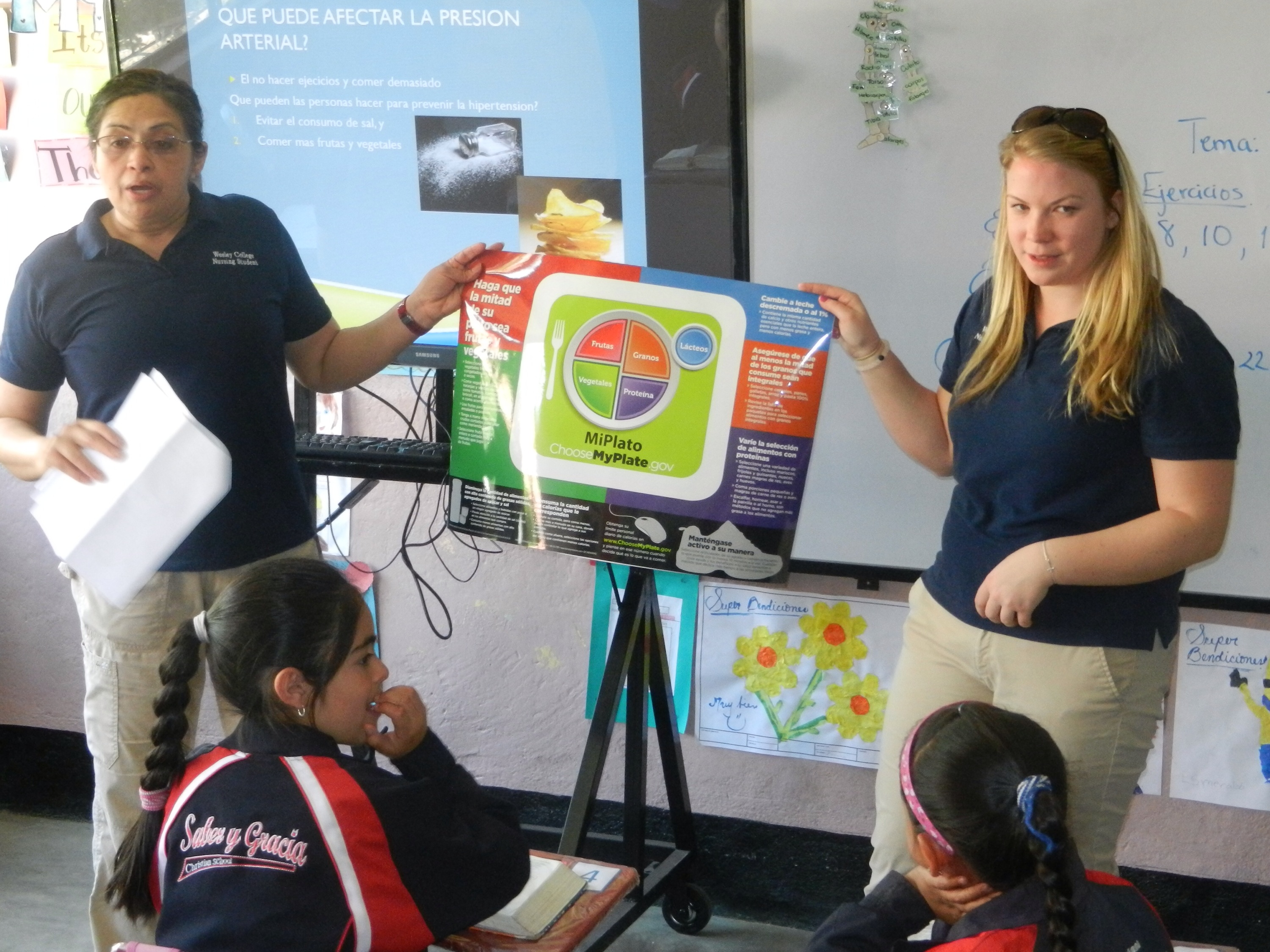
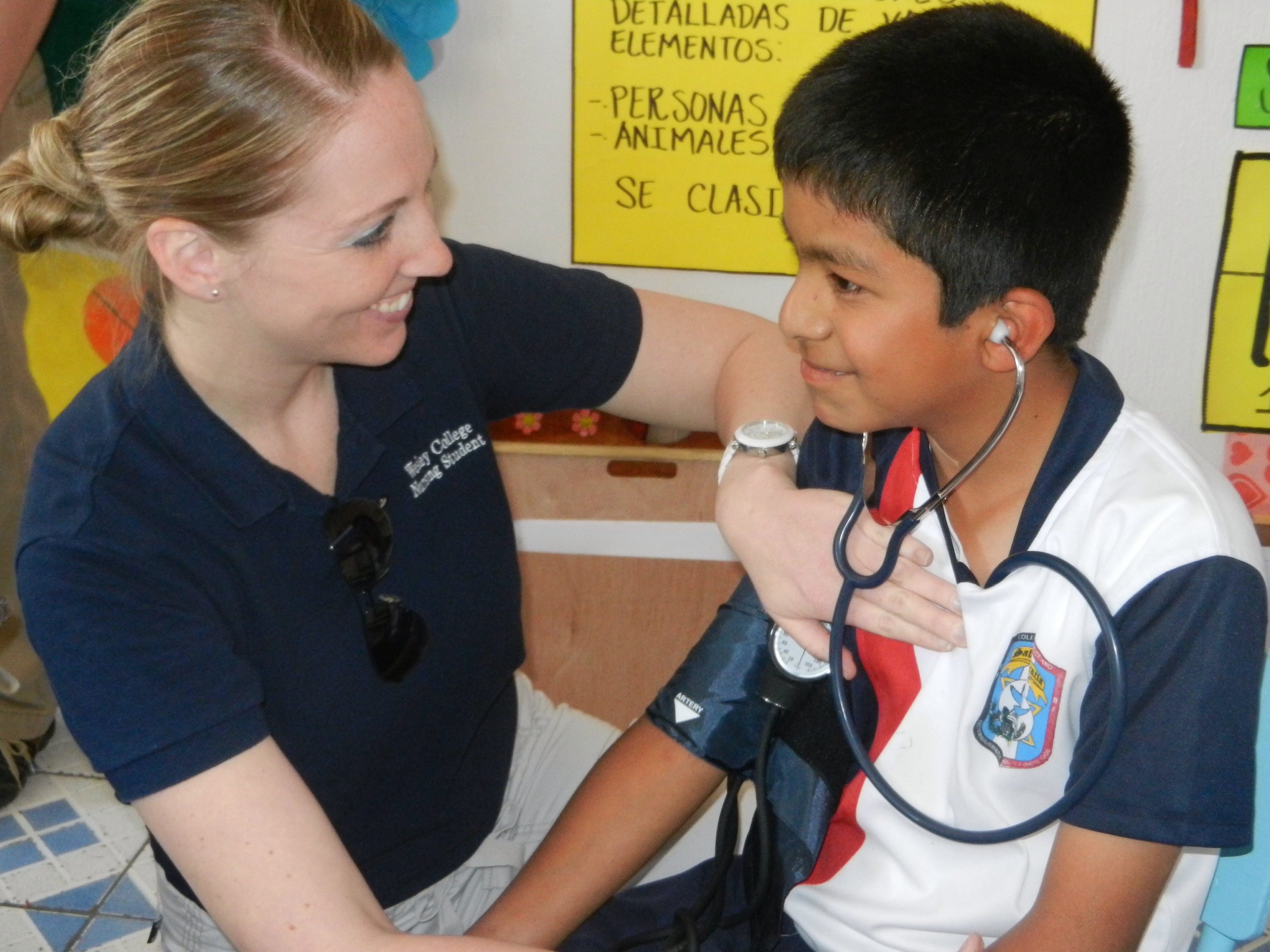
Our nursing students essentially taught health classes on fetal development (conception-birth), general nutrition, and dental hygeine. They did an excellent job of presenting the material in appropriate ways, adjusting to the different grade levels, and overcoming a language barrier. One of our faculty members who attended the trip grew up in Panama and was a blessing in her ability to translate and help connect with the students and staff.

DSCN3430

I had the honor of teaching two Bible classes on Wednesday. I taught on our adoption by God, as told by the Apostle Paul, and through the lens of our adoption of Malachi. The overall take away from the lesson (I hope) is that even when we feel adandoned- that God chooses us and invites us to be part of God’s Family- full heirs with our brother- Jesus. Wednesday evening, Rudi invited me to preach- which I did from John 4:43-54 on the Royal Official who sought out Jesus to heal his son. The take away was that we are to seek a relationship with Jesus. That faith moves us to put energy into our relationship with Jesus.

DSCN3473

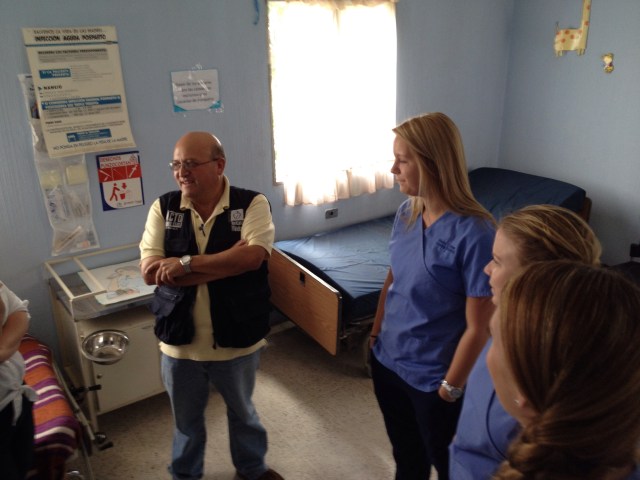
On Friday, we met with a local doctor and was given a tour of his clinic and a larger clinic in the community. Let’s say that we shouldn’t complain about our hospitals here in America! That said, these doctors do what they do because the love their community and the people in them.


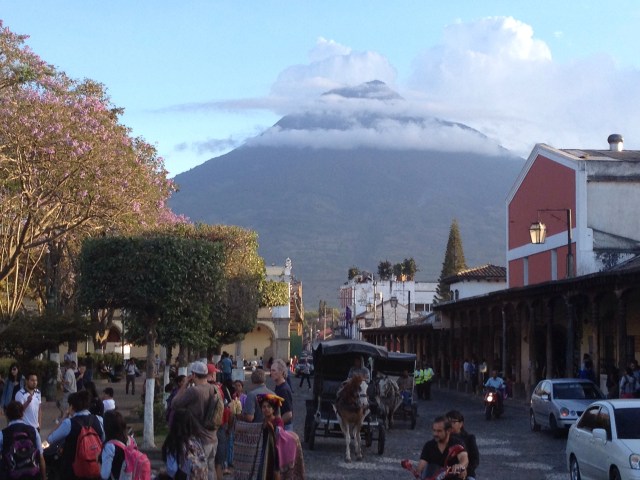
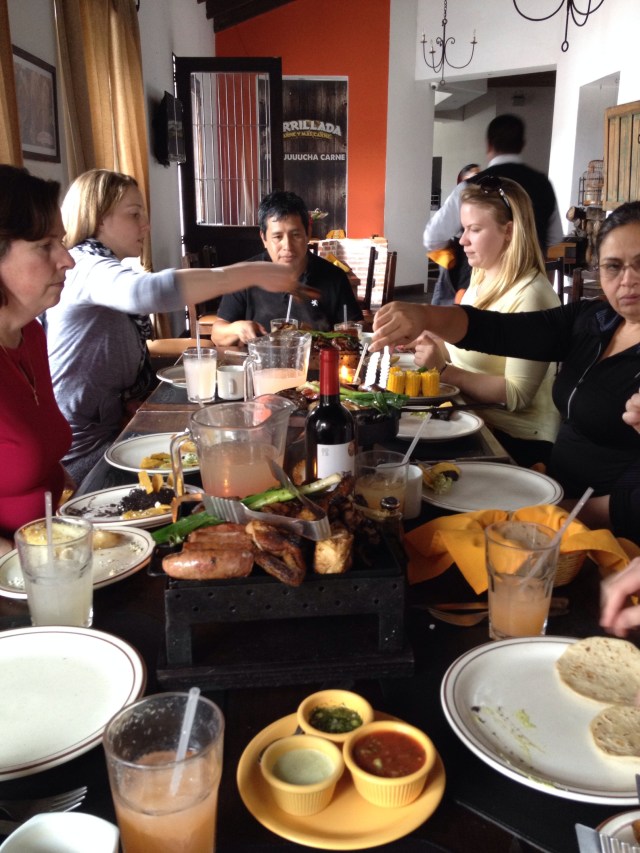
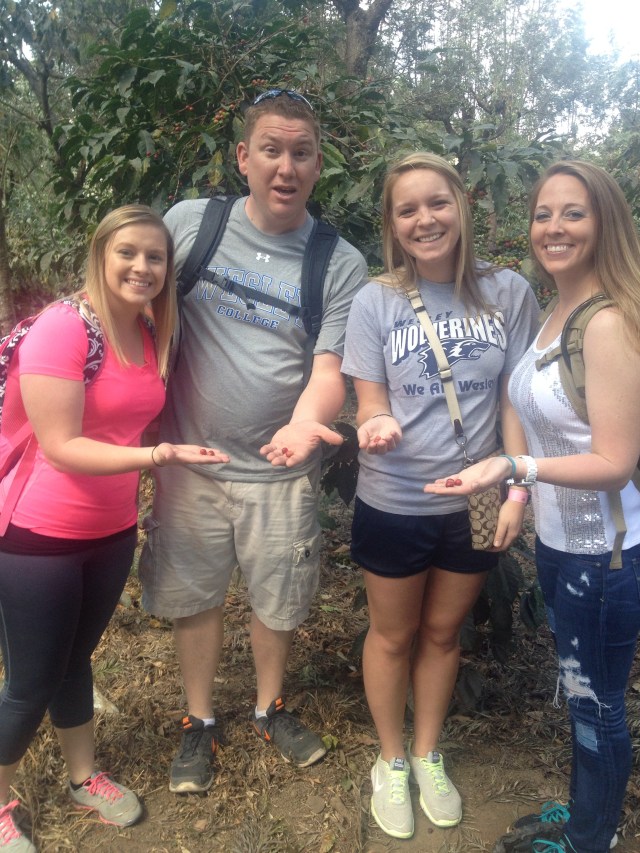
 Of course, there was a lot of fun throughout the week. Guatemalan coffee, trips to Anitgua, great food, coffee, erupting volcanoes, coffee, evidently an earthquake that none of us felt, coffee tour, Canopy tour, and more coffee.


 I will be writing more on the trip this week- and probably posting more pictures.

In the meantime, one of the greatest needs of the school is for people to sponsor a student. It cost the school $40/student per month to provide an education and faith foundation that can transform their lives and their communities. There are currently 52 students who are attending but who need sponsors (our team sponsored 8 children as a result of the trip). Prayerfully consider sponsoring a child in Guatemala. I would also be happy to answer any questions you have about the school or to tell you more about child sponsorship!

Posted in Uncategorized | Tagged , , | Leave a comment

Sweat Equity and Miracles

I am reading Mark Patterson’s book, The Grave Robber, which takes a look at Jesus’ miracles or “signs” in the Gospel of John. The tagline of the book gives away the purpose of Batterson writing: “How Jesus can make your impossible possible.”

In his chapter on John 4:43-54, Batterson writes,

“My point? Some miracles take sweat equity. Your effort doesn’t make them happen, but your lack of effort can keep them from happening. In the words of Dallas Willard, “Grace is not opposed to effort, it is opposed to earning. Earning is an attitude. Effort is an action.” You cannot earn a miracle, but effort is part of the equation. You may have to hike twenty miles uphill, but your extra effort may be the catalyst for a miracle.

Are you willing to knock on 435 doors? Fill six stone jars? Hike twenty miles uphill?

Most of us follow Jesus to the point of inconvenience, but no further. We’re ore than willing to follow Jesus as long as it doesn’t detour our plans. But it was the willingness to be inconvenienced that defined the Good Samaritan. And that’s how he became someone else’s miracle. Most miracles don’t happen on Main Street. They happen off the beaten path, about twenty miles out of town.”

In the Gospel account, the Royal Official walked nearly 20 miles uphill to seek Jesus out for healing. The officials effort didn’t cause the miracle- but would it have happened if he stayed at home? Would it happened if he quit after walking 10 miles? The official was focused on seeking out Jesus- and in doing so put himself (and his sick son) in a place where a miracle could/would occur.

Are you in need of a miracle in your life? Rather than seeking a miracle- seek the One who is Lord of time and space and can do the miraculous in your life.

Posted in Bible | Tagged , , | Leave a comment

Book Review: The Good News About Marriage

lightstock_56105_xsmall_user_769296

I am teaching a course at Wesley College called “Marriage and Families.” This is my first semester teaching and the class is a lot of fun. It is a mix of students who are psychology majors who may use the academic information for their career and students who are interested in learning more about relationships. It’s a bit terrifying when students tell me that they leave class and discuss what they are learning with their boyfriend/girlfriend- but much like a sermon, if people are talking about what was covered it’s a good thing!

I wanted to read something in the area of marriage and families and picked up the book, The Good News About Marriage by Shaunti Feldhahn. I had no clue who Shaunti is or what she does (she does  marriage conferences) before picking up the book.

The book is short, compact, and based of a lot of statistics, polls, and studies- but readable. Shaunti provides five pieces of good news about marriage based off her own research and digging deeper into many national studies. Here are the five pieces of good news according to the book.

  1. The actual divorce rate has never been close to 50 percent. It’s significantly  lower and has been declining over the last thirty years.
  2. Most marriages aren’t just so-so. The vast majority are happy.
  3. The rate of divorce in the church is not the same as among the non-churchgoing population. It too is significantly lower.
  4. Remarriages aren’t doomed. A significant majority survive and thrive.
  5. Most marriage problems aren’t cause by big-ticket issues, so being in a marriage, or fixing a troubled one, doesn’t have to be as complicated as people thing. Little things can often make a big difference.

While I won’t provide much feedback about her areas of good news about marriage I do think that figuring out the divorce rate is important. The text book I use in the course I teach states the divorce rate is around 50% of new marriages and that the rate goes up for each remarriage. My students were pretty discouraged about marriage because of divorce. They wonder, “Why get married if it’s just going to end in an ugly divorce.” We need solid research that can provide better insight on the actual divorce rate (rather than the projected- as according to Shaunti). As pastors and educators (and friends of people getting married) I want to be able to offer more hope than “there is a 50-50 change you’ll get divorced. Some of Shaunti’s statistics and interpretation show closer to a 30% divorce rate- (which means 70% of marriages are still intact- which is good news.).

While I am excited about what is written in the book, I do wish there was a way to quantify the research. Perhaps a peer-review article in a journal where research methods are challenged and affirmed. I am honestly a little skeptical about a book coming out of the Christian publishing subculture proclaiming that we’ve got it all wrong on our numbers about marriage and divorce. That said, if what the author writes is true- then it is good news! As leaders, educators, pastors, parents, and people in marriages and wanting to get married- we should encourage continued research that provides actual numbers about how marriages succeed and why marriages fail in order to help us help others (and ourselves) when it comes to relationships.

Skepticism aside, I think the book is worth a read if you work with couples who are getting married in order to have some insight on how some of the statistics have come about and offer an alternative to the “50% of marriages fail” narrative.

Posted in Book Review | Tagged | Leave a comment

Adoption Update: Malachi Moves Up

Malachi_Snow_Feb2015

It’s been a while since I’ve posted specifically on Malachi. We had a follow up appointment yesterday at CHOPS (Children’s Hospital of Philadelphia). Aside for waiting what seemed like forever to be seen- the appointment went great. I’ll give you some bullet point updates on the progress that CHOPS has seen since October 14.

  • Malachi had the diagnosis of “small stature,” but they got rid of that as he has jumped up in height, weight, and head circumference. His height was not even on the growth chart for his age in October- and now he is in the 15th percentile! Good news!
  • Malachi’s expressive and receptive communication are on par with a toddler his age. While this doesn’t sound that exciting, remember that he was beginning to learn Mandarin before becoming part of our family and learning English.
  • Malachi’s fine motor skills were at a 23 month old level (he’s 19 months) and his gross motor skills were, I believe, at a 17 or 18 month level. We think this was because of the way he handles stairs.

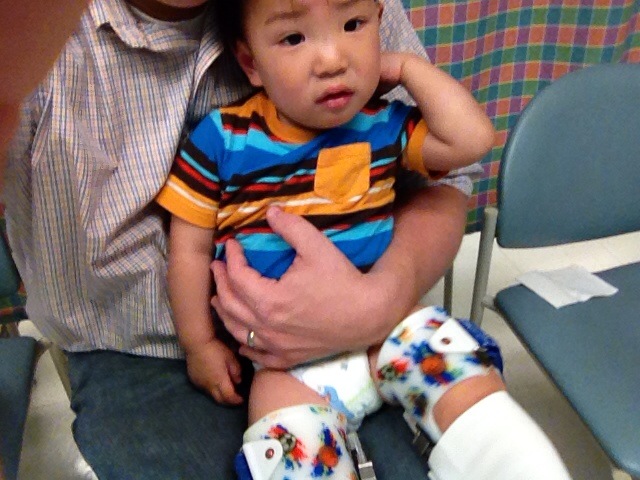
2015-02-18 14.11.17

We continue to be concerned about his legs, which are very bowed. There was some hope that better nutrition would straighten out his legs (especially in the case of rickets), but this has not been the case. We’ll be meeting with an orthopedic specialist in the near future about his legs. That being said, as bowed as his legs are they do not seem to keep him from doing anything–he is super adorable to see him run!

Much of this confirms what we have been seeing on a daily basis- that Malachi is a happy little boy who is attaching to his family and growing by leaps and bounds. Just the other night, he ate a whole chicken breast from KFC (minus the skin) himself. We couldn’t feed him dinner fast enough. His appetite has taken off in the last few weeks. He has also been sleeping much better (Praise the LORD!) and more settled at home.

Thank you to everyone who continues to pray for Malachi and for our family. It has been an incredible journey and we are grateful for your thoughts and prayers!

Posted in Adoption | Tagged , | Leave a comment

Bonhoeffer on Giving Thanks for Small Things

I read this selection from Dietrich Bonhoeffer’s Life Together. It’s convicting!

“We pray for the big things and forget to give thanks for the ordinary, small (and yet really not small) gifts. How can God entrust great things to one who will not thankfully receive from Him the little things? If we do not give thanks daily for the Christian fellowship in which we have been placed, even where there is not great experience, no discoverable riches, but much weakness, small faith, and difficulty; if on the contrary, we only keep complaining to God that everything is so paltry and petty, so far from what we expected, then we hinder God from letting our fellowship grow according to the measure and riches which are there for us all in Jesus Christ.”

I needed to read this today. It is a good reminder to me (and hopefully to you) about giving thanks for small things- and even the things that aren’t quite going the way we might want.  What are the small things that you need to give God thanks for today?

Posted in Quotes | Tagged , , , | Leave a comment

Sentness: Safe Places

We are in a series called Sentness which is based off of the book by the same name. You can go to hopedover.com/#/media to listen to sermons (when they record). Below is my manuscript which is written to help me preach- not to be a literary document.
————————————————-

One of the most nerve racking experiences I’ve had was asking a girl out on a date- especially Andrea. My palms got sweaty. I probably had sweat stains through my shirt; I fumbled over my words and it’s a wonder that she ever said “yes!”

My nervousness was evident because even though we had been talking all semester and hanging out in little ways, you really put yourself out there when you ask someone out. So I had a plan. I waited until there were about 3-4 weeks left in the semester figuring that if she said “no” that the semester would soon end and I’d just go home and wallow in self-pity.

When you ask someone out or ask someone to marry you there is a moment of vulnerability as you share how you feel and hope to God that they feel the same way. All relationships require vulnerability and trust. Intimacy requires vulnerability and trust that the other doesn’t just rip out the heart of the other person. The healthiest relationships create safe places for disagreements, expression of opinions, the sharing of dreams, and the expression of feelings.

Jesus encounters a leper in Luke 5. Leprosy was a skin disease that , according to the Levitical law, required the person with leprosy to leave their family, their children, and their community and move to the outskirts of town where they live with other lepers and those marginalized by society. In their day-to-day living, they were to shout “unclean” if anyone came near them to ensure that no physical contact occurred enabling the passerby to maintain ritual purity.

In our passage, Jesus comes into the town where this leper lived and we are told that when the leper saw Jesus that he fell at Jesus’ feet with his face to the ground and begged, “Lord, if you are willing, you can make me clean.”

In that moment, the man with leprosy lays everything out before Jesus. He makes jimself completely vulnerable. I imagine he was filled with fear and hope at the same time. Fear that Jesus would reject him or that someone would treat him harshly for not following the law. He had hope that Jesus would be everything he had heard about and would heal him, restoring him back to health and to the community.

In hearing the leper beg for healing, Jesus does something totally remarkable, something so amazing that it would take everyone by surprise. Jesus reaches out and touches the man. We don’t know how long the man has had leprosy- maybe weeks or years, but since he contracted the disease he has been without human contact. People would avoid him, well, like the plague.

Jesus puts compassion ahead of ritual purity in touching the man. This must have been shocking to everyone observing including the man. Jesus speaks, “I am willing, be clean.” Luke says that immediately the leprosy left him. After telling the man not to say anything, the man went and told everyone what happened and it let to more people seeking out Jesus’ teaching and to bring their sick for healing.

Over the last several weeks, we have been talking about what it means to live as sent people in our families, workplaces, and communities. In the past few weeks we discussed living our everyday lives in the name of Jesus, living as vital parts of our communities, and that we are to join in God’s ongoing work through Jesus to restore and redeem, bringing a hope and a future to those who seek God with all their hearts.

The question the series is asking is what kind of posture we will assume- a posture of consuming church or a posture of being sent into the world. As we consider the scripture from Luke 5, what sort of posture will we as individuals and as a church assume for the marginalized in our society; for those who may be seeking God, but their lives are a mess? How about those who are seeking answers to questions about life and faith? What posture will we assume with those who we might consider unclean or sinners?

In the scripture lesson, the man with leprosy was unclean and marginalize- and Jesus created a safe place where the man could experience healing where the religious elite would have passed him by.

As Christians and as the church, we must create safe places for people to come as they are in order to experience the Jesus and leaving forever changed. We need to create safe places for exploration of faith, wrestling with doubts, and seeking answers to questions.

This does not mean we live devoid of conviction or an understanding of right and wrong. It does not mean that our communities become a place where anything goes. It means that we assume a posture and an attitude where those who need God the most can find a safe place to encounter God.

In John 5, Jesus heals a paralytic who has been paralyzed for 38 years. After Jesus does this- he tells the man to “stop sinning or something worse may happen to you.” Jesus was addresses not that a disaster would happen, but that there is an eternal consequence for sin.

Another, and perhaps best known example, comes from John 8:1-11 when a woman caught in the act of adultery is brought before Jesus. The religious elite are ready to stone her according to the law. The leaders are also looking to trap Jesus- so this woman is no more than a pawn. But Jesus stoops down and begins to write in the sand. Finally, Jesus speaks saying, “Let any of you who is without sin be the first to throw a stone at her.” One by one, from oldest to the youngest, the men begin to drop their stones and walk away. When they are all gone, Jesus asks:

“Woman, where are they? Has no one condemned you?”

“No one, sir” the woman replied

“The neither do I.”

Jesus acted in compassion, creating safe space for this woman while maintaining the call to life apart from sin. He says, “Go now, and leave your life of sin.”

Authors Kim Hammond and Darren Cronshaw write:

“Jesus is not into the sloppy acceptance of anything goes, as if there were no boundaries on human behavior. He doesn’t condemn the woman, but still has her well-being in mind when he challenges her to a higher life and calling.”

The woman receives mercy from Jesus where others condemn. She receives a future and a hope that the religious elite did not want to offer her.

We are living in a culture and world that is increasingly non-Christian or post-Christian. Many of the people who are coming into College and in college and the work force have no reference point when it comes to the bible or with Jesus other than what they might hear or read on the Internet. According to recent surveys, the fastest growing religious affiliation are the “nones,” meaning those who have no religious connection. This means that we have immense opportunities to share the Good News of Jesus. But it also means that we have to be aware that there is no reference point for how a Christian should act or what the Bible is all about.

One such area that I think of are young people who are wrestling with issues of sexual identity. Too often they encounter judgment rather than an openness that listens and walks beside. Too often we hear of a young person taking their life because of their struggle with sexual identity and feeling like they have no one to turn to. This is not a question of whether homosexuality is right or wrong, that is another discussion- this is the need for the church (and Christian) to provide safe places for young people (all people)to be able to ask questions and find people who will walk beside them. How can we be the church to them, or to anyone, if we close the door and fail to offer safe places for dialogue. How can anyone experience transformation if there is not the space to encounter God?

We must create space for these people to seek, to doubt, to be skeptical, to ask questions, and to be invited to live in the presence of God- to go and sin no more. But if these nones, our children, co-workers, and neighbors don’t feel safe enough in exploring faith or asking questions, then they will not come to you or come to our church.

Safe places become transforming spaces

How do we do this?

  1. We must learn to ask good questions. Getting my hair cut is a favorite place to talk. When the person cutting my hair knows that I’m a pastor and they ask questions about church- it allows me to ask them if they are involved in a church- or to share about their own spiritual journey.
  2. Tell Your Story: More than doctrine or information, people seeking God will connect with your story. Let your story invite others to pursue Jesus. Our adoption story has opened the door on multiple occaisons to tell the story of God’s grace at work in Malachi’s life. As you tell the story, we don’t look to invite someone to church- but we look for our words and our actions to be the church.

Safe Places become transforming spaces.

This morning, if you are a skeptic, a seeker, or someone with questions about life, faith, God, and the church- my prayer is that this community would be safe space for you to ask difficult questions and that there would be compassion and grace available to walk through those questions together. I believe that when we seek Jesus with all our hearts that God will transform our lives. Keep seeking. Keep asking.

If you are a person of faith, a follower/disciple of Jesus consider your ministry to the skeptics and seekers of the world. How do you assume a posture of safe space so that those who seek might encounter God’s presence? Or does our posture turn people away? As we consider our sentness to a world looking for God, let us create safe places where God can transform our lives, our churches, and our communities. Amen.


Posted in Sermons | Tagged | Leave a comment

A Child’s Prayer

DSCN2593

The other night at dinner our eldest daughter, Abbie, prayed this line as part of her dinner blessing-

“Help us to be proactive in loving our neighbors.”

I was caught off-guard for a few reasons. First, that she used proactive correctly in a sentence. I had never heard her say that before. After some investigation, she shared that her class has been learning what it means to be proactive in her life-skills class.

Second, I wanted to see if she knew what it meant to be “proactive in loving our neighbors.” We talked and she said that it meant that we “look to be nice to them.” A good answer, because in “looking” we are being proactive. We talked about ways that we can be on the lookout to show our family, our friends, and our neighbors love.

This Christmas season, we remember God- who was proactive in revealing love to us. The first Messianic prophecy comes back in Genesis 3 and there are many throughout the Old Testament. God did not decide to come to earth haphazardly or reactively- but was proactive in sending Jesus, God-in-Flesh, to the earth as the ultimate gift of love in order that we might have life with God.

This Christmas, how are you proactively revealing God’s love to your neighbors? To your family? To your co-workers? When we live lives of love we shine the light of God’s love to all those around.

Posted in Christmas | Tagged , , | Leave a comment

The Real War on Christmas

iamn_0A couple of years ago, I wrote a post called Battleground: Christmas where I shared my feelings over “the war on Christmas.” While you should go back and read the post, the short end of it is this: Relax Christians! We cannot force our views, our traditions, our beliefs on those who don’t believe them or have interest in them.

It is that time of year again where we hear about the war on Christmas. About people who are upset when the clerk at the store says “Happy Holidays” or when the school Christmas Concert is changed to a “Holiday Concert.” It’s the time of year for Bill O’Reilly and FOXNews to make something out of nothing.

But there is a real war on Christmas that is happening right now. Here in America, Christians worry about Christ being removed from Christmas when people say “Happy Holidays”- but in other parts of the world, the danger is that Christians are being systematically eliminated. In the November issue of Christianity Today, Philip Jenkins wrote the cover story about whether this was the end for Mideast Christians. In the midst of the article he writes,

“It is obscene to complain about a “war on Christmas” in the United States when there are Syrian cities without Christians to commemorate their holy days at all for the first time in 1,900 years. That’s an authentic war on Christmas.”

In this season of Christmas when we remember and celebrate the birth of our Savior, our brothers and sisters are facing persecution, displacement into refugee camps, and even death. Their Christmas gatherings, most likely in secret if they happen at all, will take place at great risk. So the next time you get a little defensive over someone saying “Happy Holidays,” rather than getting upset take time to pray for our Christian brothers and sisters who are persecuted.  Pray for them, remembering that at the birth of Jesus 2000 years ago, that there was a systemic persecution trying to rid the land of the Christ-child. Pray that they might be strengthened in the face of adversity. Pray that God would be present with them. Pray for those who persecute that they might come to know the transformational love of God through Jesus Christ.

Posted in Advent, Christmas | Tagged , , , , , | Leave a comment

Elf on the Shelf and Discipling Children

nativity-elf-on-the-shelf

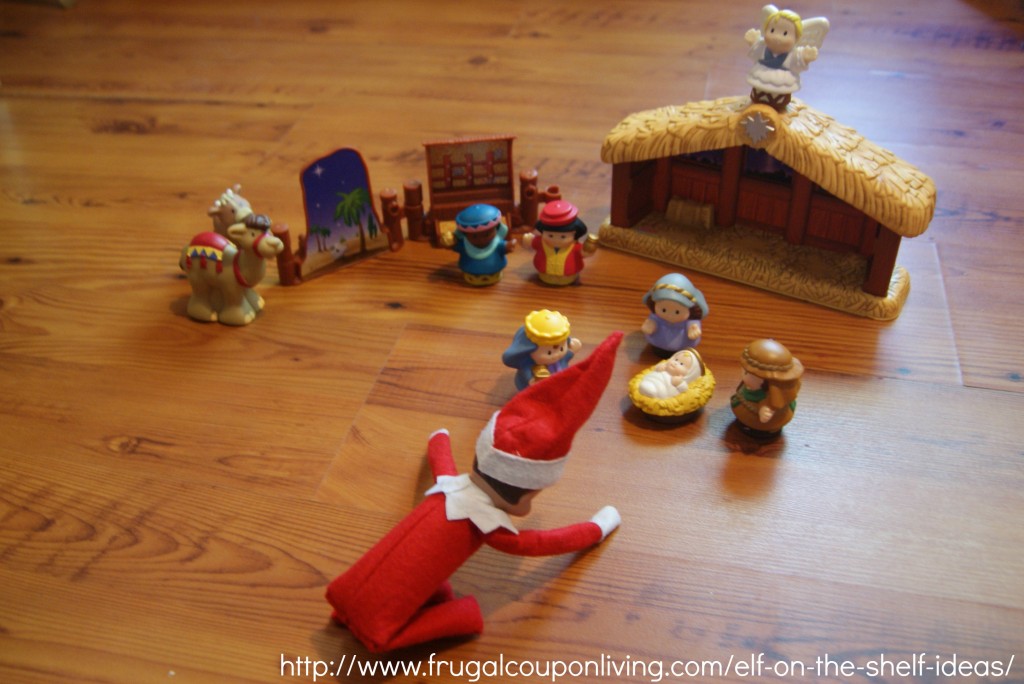
It is no secret among my friends that I am not a big fan of The Elf of the Shelf- the widely popular little guy who gets into mischief each night leading up to Christmas. It is interesting to see the different “adventures” that their elves get into, though I get tired of waking up each morning in December to a Facebook feed full of Elf on the Shelf pictures. Maybe I’m becoming grumpy since I’ve made the turn to my “late thirties.”

Seeing my FB Feed full of Elf pictures each morning makes me ponder a question: What if we discipled our children with as much enthusiasm and creativity as we put into the Elf on the Shelf? What if, instead of reading dryly from the Bible to our kids (or maybe not reading at all), we created grand schemes of adventure that paralleled the adventure of following Christ and become object lessons/parables about life with God? What if we created a culture of discipleship with our children where they were excited each morning to wake up and see how God would move in their life and in the lives of their friends?

When I see the time and creativity of those who participate in Elf on the Shelf (and a whole host of other endeavors), it makes me smile at the creativity that God has given each us. My hope as a Christian, parent, and pastor is that we might use that energy and creativity for more than some Christmas hijinks, but might use it to share the Good News about God’s love for each of us- especially to our children. That’s something worth getting excited for.

Posted in Advent, Christmas | Tagged , , , , , | Leave a comment

Resources for Advent 2014

advent_wreath

One of the favorite memories as a kid was the Advent Countdown that my mom made my sister and I. Each day of Advent, we’d get a piece of candy and countdown the days until Christmas. It was a way of helping us understand the anticipation and excitement of Christ’s appearing at the first Christmas and when Christ will come again.

Advent is a 4 week season of anticipating the appearance of Jesus. It is a time for followers of Jesus to create a new rhythm in their lives of waiting, watching, and anticipation. Today, Advent is a direct rebellion to the consumeristic Christmas that is pervasive in our culture- where Wal-Mart has their Christmas displays up in October. Advent says, “Slow down, wait and watch for Jesus rather than rushing to the manger.”

I thought that this year I would share some resources that I will be using this year to celebrate the season of Advent.

Books:

1. Not Yet Christmas-It’s Time for Advent This is a 25 day devotional written by JD Walt of Seedbed. Each day includes a scripture reading, short narration by JD, and a poem/reading that goes along with the theme. I’m really excited about what Seedbed is doing in the world of publishing and resources in the Wesleyan Theological spectrum.

2. Wait: For Weeks of Preparing the Soul for Christmas This is another devotional from Daniel Ethan Harris. Daniel and I graduated from Asbury College the same year and I’ve read some of his previous work- and I am looking forward to this book as well in preparation for Christmas.

Music:

There have been several releases over the last few years with the aim of providing music for the season of Advent. (Some songs, like JOY TO THE WORLD, might better be seen as an Advent song b/c of the focus on when Jesus will return) The following will be on heavy rotation (after Thanksgiving) on my iPod.

1. Future of Forestry (Advent/Christmas Vol. I, II, & III) Future of Forestry has a sound that is not your typical Christmas sounding music- which may be why I like it so much. The track “The Earth Stood Still” is a particular favorite of mine.

2. Page CXVI (Advent to Christmas) This band does some great work in “re-visioning” the great hymns of the faith. This means that the lyrical content remains the same and the music/melody/harmony are revision. If you’re a fan of the traditional melodies, this might not be the recording for you. But if you’re looking for a fresh approach on songs you know by heart- this album will allow you to hear these classics with new ears!

3. Robbie Seay Band (December Vol. I & II): I have been a fan of The Robbie Seay Band for many year now. I did a CD review on the blog a few years back for their album Miracle. I have December Vol. 2 which has a great acoustic version of “Song of Hope.” This is definitely worth picking up.

So there are a few resources to help you during the season of Advent. What books, CD’s, songs, or practices help you get ready for Christmas? Share in the comments below.

Posted in Advent | Tagged , | 1 Comment