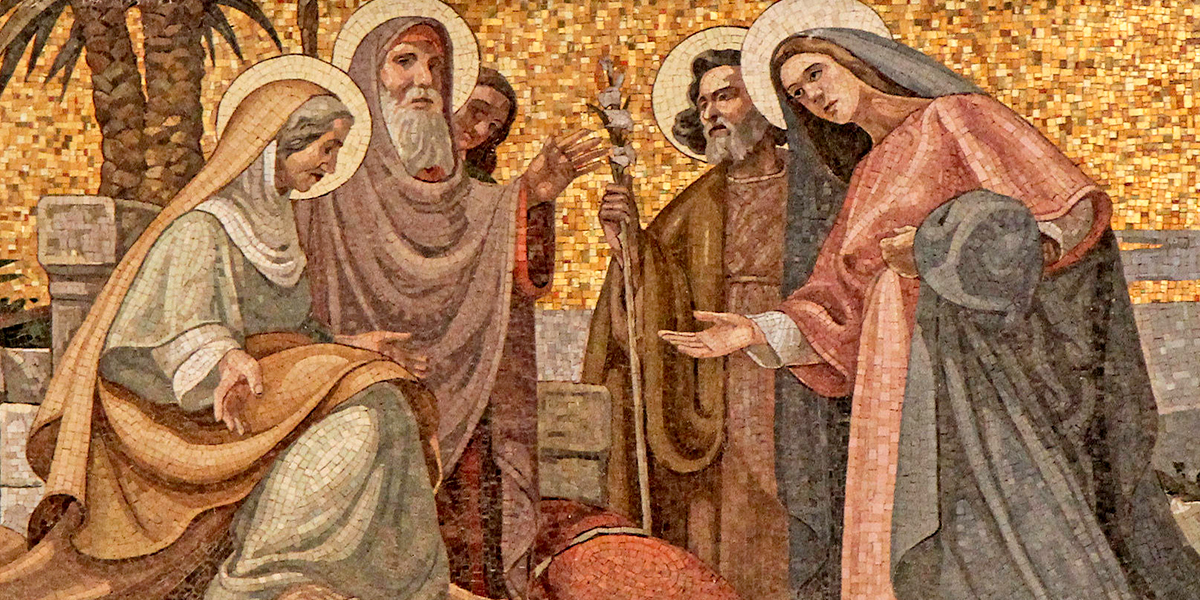
“In the days of King Herod of Judea, there was a priest named Zechariah, who belonged to the priestly order of Abijah. His wife was a descendant of Aaron, and her name was Elizabeth. Both of them were righteous before God, living blamelessly according to all the commandments and regulations of the Lord. But they had no children…” Luke 1:5-7a
Have you ever questioned God because of what you were going through? Many of us have endured some hard times and cried out to God. “How long?” we may ask. Perhaps we’ve said, “Why me, God? I am a good person. Why am I going through this hardship?” We can believe that who we are or what we do will prevent us from hardship. This is not what the Bible teaches.
Zechariah and Elizabeth made an extraordinary team in Luke 1. The Gospel of Luke regards some incredible words about them. Zechariah was a priest from the priestly order of Abijah. Elizabeth was a descendant of Aaron, the brother of Moses and the first priest of Judaism. Luke says they were both righteous, words reserved for the likes of Noah and Abraham, and that they were blameless in their ability to follow God’s law. Their lives would have been examples of piety and devotion to everyone around them.
But…
You almost know it’s coming. Luke says all these good things about Zechariah and Elizabeth, BUT Elizabeth is barren. They were unable to have children. This would have been seen as divine judgment by their neighbors. I imagine Zechariah and Elizabeth spent years crying to God to give them a child. When the angel, Gabriel, told Zechariah that his wife would bear a child in her old age, Zechariah did not believe him. Zechariah and Elizabeth’s righteousness did not prevent them from experiencing hardship, doubt, and disbelief.
Perhaps we need to turn our “but” around (insert Middle School joke here).
Rather than focusing on the “injustice” of our hardship and asking God, “Why me,” we can see our hardship and say, “But God is with me.” We can experience the world’s trials and temptations and say, “But God is faithful.” We can walk through the valleys and proclaim, “But God is good.”
Zechariah and Elizabeth experienced a lifetime of loss, but God still heard their prayers because God was with them. God is with you today. Let’s turn our buts around!
God, The human experience is filled with pain and loss, But you are good. We regularly fall short in our devotion to you and our love for others, But you are faithful. Too often, we turn our back on you and run the other way, But you are with us. Be near us today, and help us to focus our hearts on your faithfulness. Amen.
“Where can I go from your Spirit? Where can I flee your presence? If I go up to the heavens, you are there; If I make my bed in the depths, you are there.” Psalm 139:7-8
Read | Psalm 139:7-12, Jonah 1-4
Can I make a confession? Sometimes, I will go out of my way to avoid conversing with someone. I am usually just in a low-energy moment and out of space for conversation in my brain. This leads me to go around Wal-Mart to get to the register to avoid a particular person. You know God has a sense of humor, and I will often find that person in my path even though I did all I could to avoid them.
Have you read the story of Jonah lately? Go ahead, I’ll wait. It’s only four chapters.
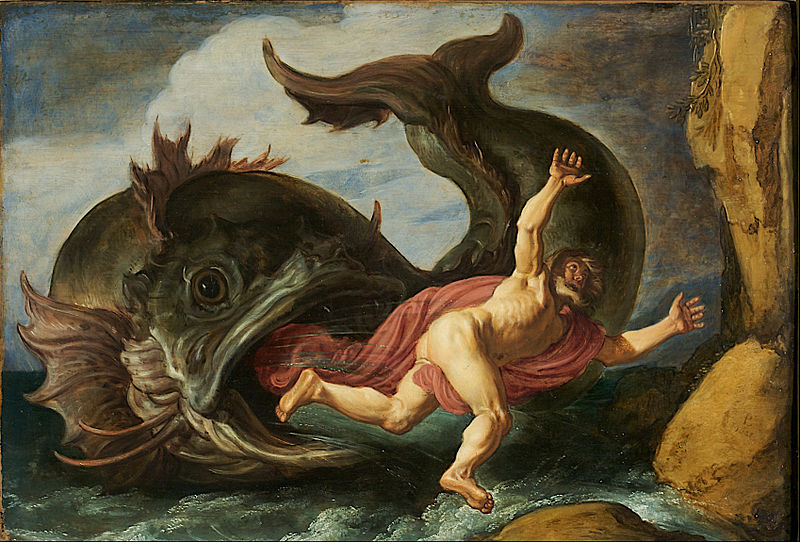
Jonah is a prophet of God who is called to go to an enemy of Israel and warn them about God’s impending judgment. Jonah decides not to go because he believes God will show Israel’s enemies grace, and Jonah doesn’t like that. Jonah attempts to flee from God’s presence and call by going in the opposite direction he was sent. If you’ve read the story, you know Jonah was thrown off the ship and swallowed by a great fish.
I’m unsure of the logistics of being swallowed by a great fish, but I’m certain it was a harrowing experience. In the belly of the fish, Jonah begins to pray (2:1). I imagine this prayer wasn’t the sort of dignified prayer we hear on Sunday morning from the pulpit but was a cry of desperation from someone close to death. Following Jonah’s prayer, the text tells us, “The Lord commanded the fish, and it vomited Jonah onto dry land.” God heard Jonah’s prayer from the belly of the great fish because God was with Jonah.
The Psalmist asks this question of God, “Where can I go from your Spirit? Where can I flee your presence?” When we go to the heights of the mountains, God is there. God is there if we find ourselves in the depths of the sea. There is no place we can go to flee God’s presence because God is with us.
One of the places we find hope in the Jonah story is that if God is with Jonah in the belly of a fish, God is with us no matter what we are going through. While it may not have felt like God was with Jonah, God answered Jonah’s prayer. God is with us in the belly of the fish. God is with us in the lowly manger through the birth of Jesus. God is with you no matter where you find yourself today. Call out to God because God is closer than you may think!
Almighty God, You meet us in the high places where we are invigorated with joy And you meet us in the depths where our life feels like it is fading away. Be with us today, no matter where life takes us. Hear our prayers as we call out to you. Amen.
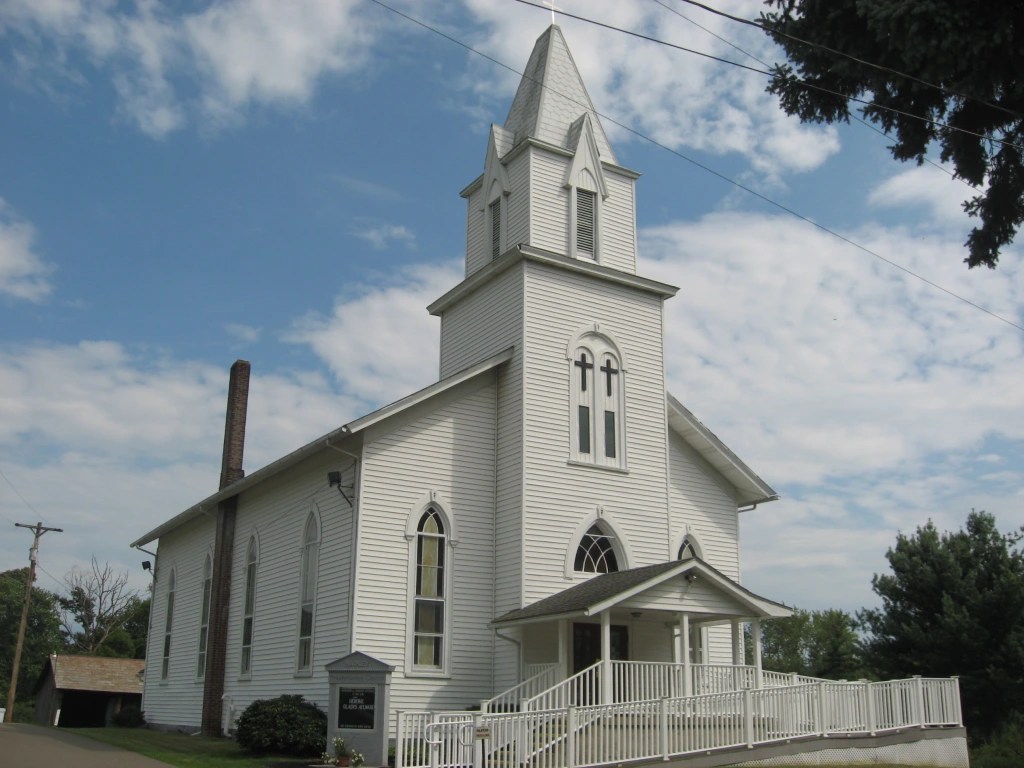
Hadley Presbyterian Church is where I first attended and wrote about in the devotion below.
Throughout Advent, I will write and share a devotional on my blog. You can subscribe to the blog and receive the devotion each morning in your email.
December 4, 2023
“Therefore the Lord himself will give you a sign: The virgin will conceive and give birth to a son, and will call him Immanuel.” Isaiah 7:14
I distinctly remember the Christmas season in the Presbyterian Church I attended when I was young. I remember the Christmas lights, the poinsettias, and the smell of melting wax from the candles. In that church, I learned to sing Christmas carols that proclaimed the birth of the Savior. Even as a child, I knew something was sacred about singing Silent Night by candlelight. I heard the familiar Christmas text about Jesus- that he will be called “Immanuel,” which means “God with us.”
The lights, the candles, the songs, and the Scriptures led to something transformational. I didn’t just hear that God was with us; I began to know that God was with me. Do you see the difference? Through the carols and the word, my faith was built on the solid foundation of Jesus, God with us. I learned that Jesus is with me because God wants a relationship.
This is an exciting development. God is not removed from the human experience. God is not in some far-off place. We are not left alone in our circumstances. God is with us in our celebrations, and God is with us in our sorrow. God is with us in our jobs, at our dinner tables, at the gym, and in the hospital room. Our earliest words about Jesus are that he is with us because he is Immanuel. God was with you yesterday, is with you today, and will never leave or forsake you.
The Christmas season can be filled with both joy and stress. It can be a time of quiet grief or overwhelming peace. God is with us through the Christmas season. Take time each day to recognize God’s presence in your life. Where did you see God act? How did you experience God’s presence and grace? May Jesus come as Immanuel in each of our lives.
God, who is with us, Come into my life this Christmas season. Give me eyes to see and ears to hear your presence And activity in my life. May others see you present in my words and deeds. Amen.
It’s Thanksgiving Week. If you love food, this is your holiday! Our family will have the traditional Thanksgiving food: Turkey, stuffing, mashed potatoes, green bean casserole, and pumpkin pie. I’ll be honest: while I enjoy turkey on Thanksgiving, I get pretty excited thinking about the other options some families have for their Thanksgiving meal. The day’s importance is to give thanks for the blessings that God has placed in our lives. Christians should cultivate a lifestyle where gratitude is infused into our daily lives.
Earlier this Fall, we completed a series and study called ALL IN. In the book of the same name, author and pastor Mark Batterson writes,
You take approximately 23,000 breaths daily, but when was the last time you thanked God for one of them? The process of inhaling oxygen and exhaling carbon dioxide is a complicated respiratory task that requires physiological precision. We tend to thank God for the things that take our breath away. And that’s fine. But maybe we should thank him for every other breath, too!
Batterson’s point is that we have much to be thankful for, including the fact that we woke up this morning and our lungs filled with oxygen.
This morning, we want to consider the blessings God has placed in our lives as resources we have been called to be stewards of.
[Pray at 10:30 a.m.]
Tell The Story
Jesus tells a parable about a landowner who is rich beyond the average person’s imagination. He is preparing to go away on a trip and handing over responsibilities to her servants based on their abilities (capabilities). To one servant, he gives five talents; to another three talents, and the final servant, he gives one talent. The landowner went away on his trip with no timeline for his return.
We need to talk about talent for a minute. It’s hard to come up with an accurate idea of how much money a talent is in today’s world. Talent was a form of weight, not an amount of money. So five talents would have been an amount of gold weighing five talents. I have read that a talent of gold was equal to 6,000 denarii. One denarii was equivalent to a day’s pay for the average day laborer. With that in mind, one talent would be worth 20 years’ wages for an ordinary worker. Five talents would be 100 years of income. Someone making $15/hour working 40 hours a week would make a yearly income of $31,000. On that number, five talents are $3.1 million by our American standards. This is no small sum of money.
We are not told how long the landowner is away, but we are told that the servant with five talents immediately went to work and made another five talents for a total of ten. The second servant turned his three talents into six. These servants invested and took the necessary risks to do the work of their Master. The final servant buried his talent in the ground, which was a common way to keep money safe from disasters or thieves. This method left no possibility for loss and no potential for gain.
When the Master returned and saw that the two servants were industrious, risk-taking, and prosperous, they were rewarded and praised. The third servant was not only scolded; he had his talent taken away from him and given to the first servant. The final servant was punished by being cast out to the outer darkness where there is “weeping and gnashing of teeth.”
Explain the Text
What can we learn from our parable today?
Let’s consider a talent in the modern sense. Talent today refers to the natural endowments of a person. Some people have talents from a young age. We’ve all seen it. On the other hand, Scripture tells us that some talents are supernaturally given. As we operate with the Holy Spirit, we are given Spiritual Gifts for the common good. We do not all have the same gifts or abilities, but we are all called to be industrious and to use our talents to advance the Kingdom of God. The parable challenges believers to emulate Jesus by using all that God has given us for the sake of the Kingdom. God is pleased and joyful when disciples use all their gifts for the Kingdom. When we take risks and lay down our lives for the Kingdom, God says, “Well done, good and faithful servant.” Likewise, there are consequences for us when we fail to use what God has given us.
Perhaps we should consider ourselves spiritual venture capitalists. A venture capitalist invests private equity into a start-up with high growth potential. A venture capitalist assumes a lot of risk by investing their money. The payoff, for them, is a stake in the equity of the start-up. Not every investment pans out. Some investments provide a considerable return.
Another example could be KICKSTARTER. This is a web-based crowdfunding site where artist and musicians will share their dreams and goals, and you, the fan, can invest your own money in the project. The return on your investment is the album or something else developed by the artist.
A venture capitalist and a Kickstarter supporter use their resources to invest in projects with the long-term goal of a particular reward.
Disciples of Jesus Christ are called to be risk-takers who use all their resources for the goals of the Kingdom.
The parable’s point is not about financial return but encouraging disciples to live out their giftedness and potential for the Kingdom fully. We are to take risks by sharing our faith, proclaiming the good news, and using our resources to do Kingdom work. This risk-taking should emulate Jesus: To care for the poor, feed the hungry, seek justice for the oppressed, and point others to salvation through the cross.
If disciples are called to be risk-taking followers of Jesus Christ who use all their resources for the Kingdom, how much more true is that for a church- a collection of disciples? As a church, we cannot settle for the status quo. We cannot settle for safety. We cannot settle for tried and true. We cannot settle for “we always did it this way.” Why? The stakes are too high.
The church landscape in our nation is changing rapidly, and the church is struggling to keep up. 74% of the Silent Generation was either Protestant or Catholic. 19% of that generation are “nones,” meaning they claim no religious affiliation. 38% of Generation Z (born) are Protestant or Catholic, while 51% are nones. Each day, we lose more folks from the Silent Generation. Every day, more members of Generation Z become adults. [1]
Likewise, when we think about the shift in church attendance over the last 10-20 years, there are many reasons you might hear. The church is too political. The church is not welcoming. People are deconstructing the faith. In the book The Great DeChurching- the biggest reason for someone to stop attending church is that they moved. Think about that. They didn’t quit- they slowly slid to where they stopped coming.
Church, what are we going to do about this?? What resources has God given us to invest in the call to make disciples of all nations- and all generations? How has God gifted you and us to call and inspire people to follow Jesus?
The parable has an actual warning to us as believers and the church. The risk-averse servant buried in talent in the sand, who committed to keeping the status quo, was cast out into the outer darkness where there is weeping and gnashing of teeth. This language is used throughout the Bible as a language of punishment and deep grief. This servant committed no crime. No heinous sin. If the servant is guilty of anything, they are guilty of failing to take the same risk that his Master took. They steadfastly refused to use their resources in a way that reflects the Kingdom of God.
John Wesley wrote, “The possessor of heaven and earth placed you here, not as a proprietor, but as a steward.”
Brothers and sisters, we cannot act like the third servant and bury our gifts, hoping that the status quo will somehow come back in vogue. If we are to do the work that God has called us to, we must take risks and try new things for the sake of the Kingdom. Not everything we do will have a return, but not doing anything will get the same results. God has placed blessings and resources in your life for Kingdom work. How are you being good stewards of these resources to reach and disciple others?
As we give thanks for the numerous blessings in our lives, let us invite the Holy Spirit to inspire us with dreams and visions of using our gifts to impact our world for the Kingdom. Let us take risks so that we might win some to Christ. May we never be guilty of burying our gifts in the sand.
[1] Ryan Burge in a tweet made on 10/26/23 on x.com.
Imagine that you’ve decided to go sailing. The problem is that you know next to nothing about sailing. So you go to the store and purchase several books to find out what’s involved. You carefully read them, and then you talk to a veteran sailor who answers questions for you. The next day, you rent a sailboat. You examine it closely to make sure that everything needed for a successful sailing experience is present and in good working order. Then, you take your boat out onto the lake. Your excitement is at a fever pitch, though you’re also afraid. But you follow the instructions you’ve read and the counsel received from the experienced sailor, and you launch your boat into the water. You carefully monitor each step and hoist the sail.
At that precise moment, you learn a crucial lesson. You can study sailing. You might even be able to build a sailboat. You can seek from the wisest and most veteran of sailors. Under a bright and inviting sun, you can cast your boat onto the most beautiful lakes. You can successfully hoist the sail. But—and this is a big “but”—only God can make the wind blow!
We are in the third week of our series on The Holy Spirit. We pray that we might become a people and a church that depends on the presence of the Holy Spirit in every area of our lives. Two weeks ago, Pastor Neyda shared that the Holy Spirit is God’s living presence at work. Last week, I shared that the Holy Spirit is a person, not a thing and that we must cultivate a friendship with the Holy Spirit. This morning, I want to look at some scriptures that help us to see what the Holy Spirit does in us, through us, and in our world.
The Holy Spirit Gives Us New Birth
One of the better-known scriptures in the Gospels is John 3, where Nicodemus approaches Jesus at night. John 3:16 is found in this story. Before that verse, Jesus tells Nicodemus that no one can see the Kingdom of God without being born from above (or born again). Nicodemus asks Jesus how someone can enter their mother’s womb a second time. To which Jesus replies,
“Very truly, I tell you, no one can enter the kingdom of God without being born of water and Spirit.”
John 3:5
We have this problem in our humanity where we believe that we can achieve the things of God or enter the kingdom of God on our own merit. There is a fallacy. On our own, apart from Jesus, we are entirely unable to enter God’s kingdom. It is necessary to be reborn or made new through the power of the Holy Spirit. Human nature is so tied up in sin that it takes the activity of the Spirit to set us free and to enter the Kingdom of God. The Spirit gives us new birth.
The Spirit Gives Us a New Family
When a child is born, they are born into a family. We are given a new family when we experience new birth through the Spirit. Paul writes, in Romans, that we are adopted into God’s family when we live by the Holy Spirit. As an adoptive father, I love when we encounter adoption language in the Bible. For an orphan, many come to an orphanage without a family, name, or hope. Through adoption, children are given a family, a name, and hope for the future. It is a complete reversal of the story.
When you and I are filled with the Holy Spirit and given new birth through the same Spirit, an adoption occurs. We are children of God in the family of God. Without this new birth or adoption, we have no Kingdom family, we have no name, and our eternal future is hopeless. Through the Spirit, we are brought into a new family and given a new name (Children/Son/Daughter of God), and we hope for eternity with God. In this new family, there is deep intimacy because of the rescue that took place and the love that is shared.
The Spirit Creates a Family Likeness
While it indeed happens for biological children to take on the appearance and actions of their parents, over time, adoptive children begin to sound like their parents. Just like biological children, adoptive children start to pick up on their mannerisms and speech patterns.
When we are reborn through the Spirit and adopted into God’s family, the Holy Spirit creates a family likeness in us. Paul writes in 2 Corinthians 3:18,
“And all of us…are being transformed into the same image from one degree of glory to another; for this comes from the Lord, the Spirit.”
Through the Holy Spirit, a transformation will occur in our lives. We will begin to look and sound more like Jesus. It doesn’t happen all at once, but the Spirit shapes us over time. How do we see the likeness of God in us? Paul writes that through the Spirit, we will develop the Fruit of the Spirit: Love, Joy, Peace, Patience, Kindness, Goodness, Gentleness, Faithfulness, and Self-Control. We know that the Spirit is at work in us as we exhibit these characteristics in our relationships.
The Spirit Gives Gifts to the Family of God
The anticipation and beginning of the celebration of Christmas begins this month, whether we like that or not. The other day, my boys started their Christmas wishlist. They know the family will want to know what they want for Christmas because they often give gifts. The family of God is no different. Our Abba, Father, gives gifts to those born again through the Spirit. Paul writes,
“Now there are varieties of gifts, but the same Spirit; and there are varieties of services, but the same Lord; and there are varieties of activities, but it is the same God who activates all of them in everyone. Each is given the manifestation of the Spirit for the common good.”
1 Corinthians 12:4-7
Paul lists these spiritual gifts in several places in the New Testament. They include words of wisdom, words of knowledge, faith, gifts of healing, gifts of miracles, words of prophecy, speaking in tongues, and interpreting tongues. These gifts are all activated by the same Spirit for the common good- for building up the church and ministry.
Finally- The Spirit Empowers Us for Ministry.
We spent some time on this last week in Acts 1- but it bears repeating. As we are reborn through the Spirit, brought into the family of God through the Spirit, and transformed into the image of God through the Spirit- we are empowered for ministry by the same Holy Spirit. A ministry that is filled with the Holy Spirit is a ministry that is transformational and life-giving. It will emphasize God’s redemptive work through Jesus and a call to holiness in the practical ways we live our lives. The Book of Acts never happens without the presence of the Holy Spirit. The church will be impotent in our ministries without leaders and ministries filled with and empowered by the Holy Spirit.
You and I are called and invited to be part of a new family- the family of God. We are initiated into this new family when we are born again. We are no longer slaves to sin but are children of God. It is the Spirit that helps our lives to transform and conform to the image of Christ. The Spirit gives us gifts, as every family does, for the good of our new family, and we are empowered for ministry that invites others to join the family of God through Jesus’ life, death, and resurrection.
I want to experience the Spirit’s power in my life and ministry. I want us to cultivate a deep friendship with the Spirit to where our church desires and longs to look more like Christ. To hunger and thirst for a more profound encounter with God. I want to be part of a community operating through our Spiritual Gifts for the common good- to serve, encourage, and proclaim the Good News of Jesus Christ. I want to know the Spirit’s power in ministry, where lives are changed and transformed. Where marriages are reconciled. Where illnesses are healed- people come to Christ because the power of the Spirit in this place is apparent.
In our community, some saints before us testify to the power of the Holy Spirit. Their lives are examples of the Spirit’s presence and power. I am grateful for the example of numerous saints who have shared the Spirit’s power with me. My life would not be the same if these saints did not cultivate a friendship with the Holy Spirit and walk with the Spirit daily.
For those of us who grieve the loss of a loved one today- whether we read off the name in a little bit or not- Jesus promised the Holy Spirit for a time like today. Jesus promised the Spirit as an advocate who would bring peace. Not peace like the world gives- a more profound, complete peace. Jesus pledged to peace- or wholeness- through the presence of the Holy Spirit. As we remember our saints today- let us seek the Spirit’s presence and power to comfort and bring us peace. Amen.
In the fantasy series A Song of Fire and Ice by George R. R. Martin, there is a character named Cately Stark who loses most of her family to the violence of another family. Catelyn, and her son both died together in one part of the story. Catelyn is later revived as Lady Stoneheart. As the name suggests, she is no longer the empathetic and loving woman she was before but is bent on revenge. Her heart has become as hard as a stone through anger, bitterness, unforgiveness, and rage.
The Bible warns us about developing a heart of stone. In the book of Exodus, Pharoah continually rejects the Word of God spoken to him through Moses. In the Exodus account, the author mentions eight times (Ex. 7:13, 7:22, 8:15, 8:32, 8:12, 9:35, 10:20, 10:27, 11:10) when Pharoah’s heart was hardened by his refusal to obey God’s Word.
There is a similar challenge in our lives. Our hearts can become hardened to God’s things and to our neighbors’ plight when we reject God’s Word. When we choose to live with anger and unforgiveness, our hearts can become hard towards those who have wronged us. When we allow fear of others to motivate our choices, our hardened hearts prevent us from seeing others as fellow humans. When our hearts become hardened, we cannot see the world and those around us the way God sees them.
There is hope for a hardened heart. The prophet Ezekiel declared God’s word to the people, a word of hope and restoration. During their exile, God says,
“I will give you a new heart and put a new spirit in you. I will remove from you your heart of stone and give you a heart of flesh. And I will put my Spirit in you and move you to follow my decrees and be careful to keep my laws.” Ezekiel 36:26-27
God promises Israel that He will take their heart of stone and replace it with a heart of flesh. Stone is hard, inflexible, and cold. A heart of flesh has life, is softened, and provides warmth. A heart of flesh allows us to be moved by worship and to perceive that God is at work in us and in those around us. It is the work of God’s Spirit to make this transformation. The Holy Spirit helps us to be alive and receptive to God’s way, which gives our hearts life.
Are there areas of your life where your heart has become hardened? Do you need the Holy Spirit to do a heart transplant, taking your heart of stone and replacing it with a heart of flesh? My prayer, as we learn more about the work of the Holy Spirit, is that each of us would pray to receive God’s Spirit, which renews and makes us truly alive.
I read the book The Irresistible Revolution by Shane Claiborne when it came out nearly 20 years ago. Shane grew up in Appalachia, went to college at Eastern University in Philadelphia, and currently lives and serves in the city. He has taken a radical approach to living out Jesus’ call for disciples to be servant leaders willing to wash their feet rather than build platforms.
Shane had correspondence with Mother Theresa before she died in 1997. In one of his letters, he shared his desire to come to Calcutta to serve with Mother Theresa to care for the poorest of the poor. In response to Shane’s letter, Mother Theresa said, “Find your own Calcutta.”
Mother Theresa’s response was not meant to be dismissive. She encouraged Shane to find an area of the world where God has placed a calling and a passion for the people there. Shane didn’t need to go to Calcutta; he needed to serve where God had him.
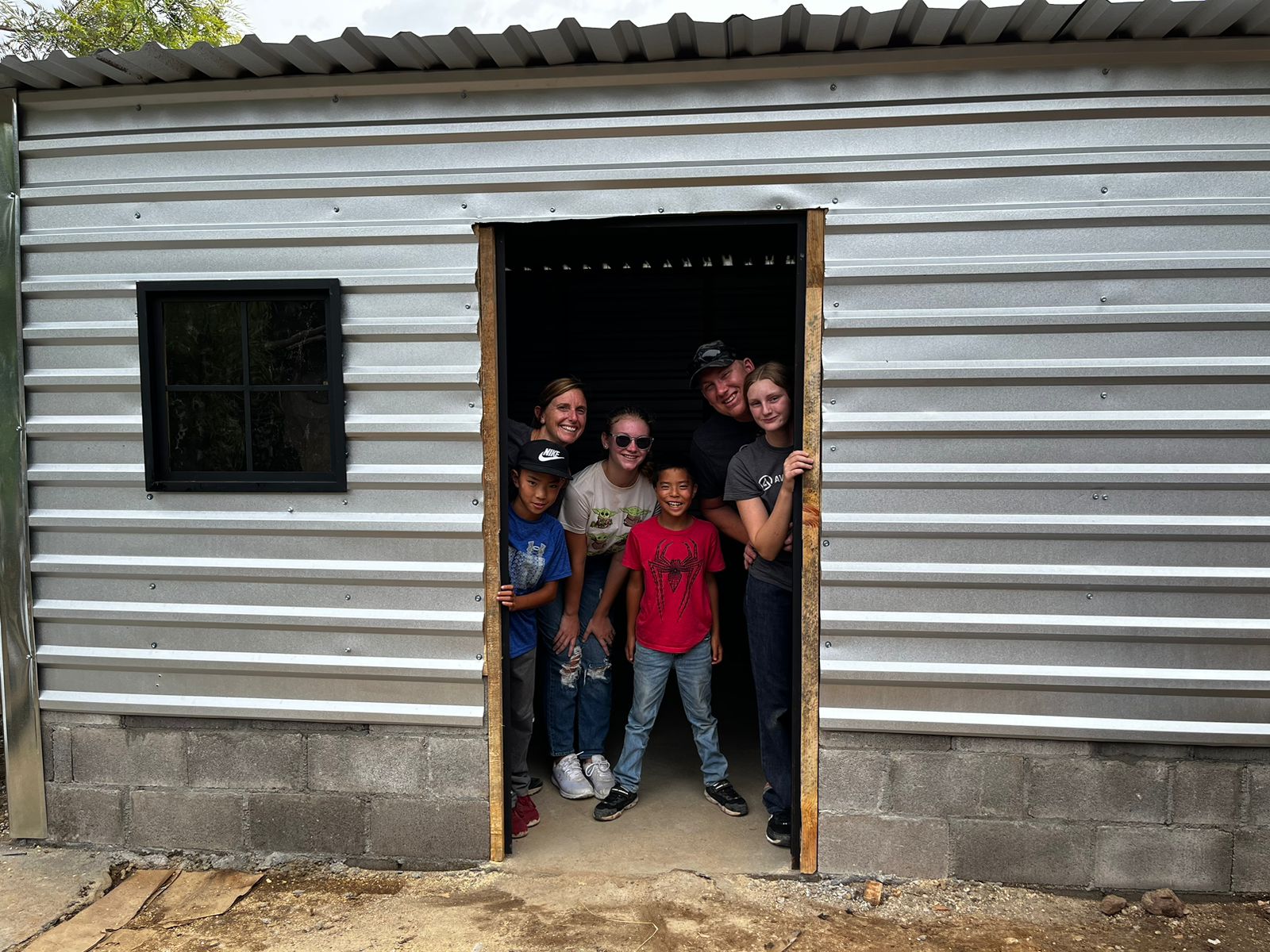
I love Guatemala, and our family just recently returned from that beautiful country. I’ve been there three times in the last 7 years. I am captivated by the people and their joy for Jesus despite their poverty and difficulties in life. I have learned so much from the friends I’ve made in that country. As much as I would love to move to Guatemala and serve there, Mother Theresa’s words ring in my heart: Find your own Guatemala.
Think about where you live. We may have roots there. We care for the people and the community. God has placed us in a place where we can be the hands and feet of Jesus. As followers of Jesus, we are called to wash our neighbors’ feet and serve those with needs. In each of us, God has placed a passion for this community and wants to use our passion to bring hope, love, and salvation through Jesus to others.
How is God calling you to be the hands and feet of Jesus? Where are you living out your call to share the Good News? Let us pray to find tangible ways to serve and share love with our community.
While I never started counting, I am sure I would have lost track of the number of times I’ve asked my kids, “Are you listening?” Like most kids, they’ve heard what I’ve said, but they have not done what they have been asked to do. They have heard, but they have not (yet) listened.
James writes, “My dear brothers and sisters, take not of this: Everyone should be quick to listen, slow to speak and slow to become angry, because human anger does not produce the righteousness God desires.”
There was a time where I thought this verse was encouraging believers to care enough about the people around us to where we listen and seek to understand before letting our voice be heard. That’s not a bad principle, but I’ve come to see this passage in a different way.
First, James is concerned about anger in the passage. It’s not just about listening or speaking- but about the anger that people in the church are exhibiting. In chapter four of James, it appears that the church is fighting and quarreling with each other. Believers desire what they do not have and consider murder (!) as a way to get what they deserve (check out 4:2). In chapter one, James warns how evil desires tempt us into sin. It seems that believers have been tempted to believe that physical violence was an appropriate response to the injustices they were facing.
What is James encouraging believers to listen to? James writes, “Do not merely listen to the word, and so deceive yourselves. Do what it says.” James wants the church to hear God’s Word and to put it into practice. This introduces a theme he will pick up in chapter three. For a believer, it is not enough to listen to the word, we must practice the word.
What does that look like? We should read The Sermon on the Mount (Matthew 5-7) and put these teachings into practice to avoid anger, shun adultery and lust, to love our enemies, to love our neighbors, protect the marriage covenant, turn the other cheek, and so on. These are just some of the teachings of Jesus of what a believer’s life is to look like. We are to be quick to listen (and put into practice) Jesus’ teachings.
Are you practicing the Word of God or merely just hearing it? Let us be believers who seek to practice the teachings of Jesus in our own lives.
Our team at Avenue Church is preaching through the letter of James. There is always more content than can make it in the sermon. I will be regularly blogging through the book of James as a way to go deeper.
I was listening to a podcast recently about my 1st place Pittsburgh Pirates (I share that because I don’t get to say it often), and the podcast host said something that I thought was really important. He said that talent evaluators in baseball learn more by watching a prospect struggle than by seeing a prospect succeed. He said a trained eye can learn a lot about how someone handles adversity that prepares them for the next level versus coasting on natural talent. To put that in the terms of James’ letter,
“Blessed is the one who perseveres under trial because, having stood the test, that person will receive the crown of life that the Lord has promised to those who love him.” James 1:12
Each of us will have our faith tested in this life. There is no way to avoid this. How we respond to adversity and testing will reveal our faith. As we lean on God and persevere, the testing leads us to maturity in our walk with God. It is that maturity that enables us to help others who will also go through times of testing.
When a silversmith works with silver, they will put the element in a fire to burn off all the impurities. The silver that comes through the fire is more pure and more valuable. Likewise, steel is forged in fire to make it stronger. Clay is baked in the first to strengthen it. You get the point, right? When we go through the fire, test our faith, and persevere through Christ, we come out stronger on the other side.
What sort of test are you going through right now? James encourages us to encounter tests with joy (1:2) because we know the benefits of testing- a strengthened faith. Let us lean into Jesus, who calms the storms and meets us in the fire.
Our team at Avenue Church is preaching through the letter of James. There is always more content than can make it in the sermon. I will be regularly blogging through the book of James as a way to go deeper.
We live in a world that often lacks common sense, let alone wisdom. Critical thinking has been tossed out the window as we settle for answers that align with our own views in spite of cognitive dissonance. As a Christian, wisdom is something we are to pursue and seek. We are to live a life filled with wisdom, discipline, and to know right from wrong.
It is not a surprise when James encourages his readers to seek wisdom from God. James writes,
‘If any of you lacks wisdom, you should ask God, who gives generously to all without finding fault, and it will be given to you.”
James 1:5
If we read this verse in context, James is specifically encouraging his readers to seek God’s wisdom during trials and difficult times. Trials and persecution was the very real circumstances that the church found itself in during this time. By seeking wisdom, Christians avoid the kind of doubt that drives us away from God. Wisdom acknowledges the trials and considers joy because we know that God is still at work in our lives.
This is the kind of wisdom that is needed in the church today. The wisdom to understand that suffering and trials are part of the human experience. The wisdom to persevere through trials where our faith in God stronger and more mature than when the trial began. The wisdom to seek God in the midst of suffering for God is always with us.
Do you lack wisdom? Ask God today (and every day) for the wisdom to make sense of the world and all that goes in within it.





 Exiled Community