My Thoughts on Craig Groeschel’s Thoughts on the UMC- Part 6

In his final post on the UMC, Craig Groeschel says this…

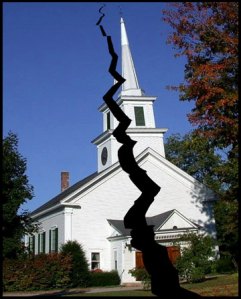
“I think the United Methodist Church either needs to become united again or intentionally part ways.”

It’s certainly a controversial idea to encourage a split when sides cannot reconcile.  When General Conference comes up every four years, it is the areas of contention that get all the publicity.  Hot button issues such as homosexuality get pushed to the forefront when there are some many other important issues in the life of the UMC that need to be discussed. (Read more after the jump)


Part of the problem of Craig’s blog post is that he did not define what he meant by “liberal” and “evangelical.”  I have my own ideas what he meant by that, but it’s possible that if you read his blog (or this blog) that you have your own definition of liberal or evangelical.  While things may seem to be black and white- many times we see gray rather than clear cut distinctions. (Yes, that is a shout out to Adam Hamilton)  While I grew up in a pretty conservative church- and I still consider myself theologically conservative and evangelical- the church I grew up in might think I’m a little liberal in some areas.  We have to be careful tossing around labels.

So what about his blog post?

  1. It seems to me that as I talk with some of my UMC friends that there is a feeling that a split/fissure may happen somewhere in the near future.  I am not sure that any side of a possible split should take preemptive measures.  We should mourn our lack of unity in the church, and fight to find ways to preserve it as much as possible.
  2. That said, there are some issues that would cause me to question my place in the UMC.  I believe that I am call to the UMC- but above all things I am called to Christ.  I think that each of us has to take stock of what we believe to see if we can minister with integrity within the boundaries of our denomination (that goes for any denomination).

I grew up in the UMC and have seen the Church’s impact.  It is my prayer that we will listen to God and find ways to reconcile and come together rather than turning away from one another.

What do you think of Groeschel’s idea that the church should split if it can’t agree?  What does it mean to minister with theological integrity within the UMC? Should churches/pastors/congregations compromise theologically for the sake of “unity?”

Posted in Uncategorized | 2 Comments

My Thoughts on Craig Groeschel’s Thoughts on the UMC- Part 5

In the fifth blog from Craig Groeschel regarding the United Methodist Church, Groeschel addresses how many church (in the UMC and other denominations) have mainly/mostly empty buildings and how churches should attempt to share ministry/space/resources together.  Looking at it from my church perspective- there are parts of our building that gets used frequently, while there are some other rooms/areas that seldom get used.  It certainly maximizes the dollars a church spends on buildings if the entire building gets used throughout the week.  First some thoughts on our buildings and then some thoughts on sharing resources.

  1. Our church buildings (or buildings of the church) have become too sacred.  The building is not the church- the people are.  With that in mind, our buildings are mearly a tool for the spread of the gospel.  Unfortunately, our buildings have become sacred cows and many churches are reluctant to truly do everything possible to make sure all the rooms in the building are multi-purpose (I’m looking at you, Sanctuary!)
  2. I am a proponent of no pews in the sanctuary.  (Yes, I heard a collective gasp-maybe from Avenue’s congregation!) I think sanctuaries should have chairs that are removable, whether your sanctuary is a modern “multi-purpose” room or a gothic looking sanctuary (like Avenue).  At Avenue, our sanctuary gets used on Sunday  for four services and then sporadically in the week (mostly music rehearsals for Sunday.)  If there were chairs in the sanctuary- the floor space could be set up in all sorts of configurations to hold meetings, classes, etc.  The sanctuary moves from being a tool to use only once a week for worship- into a tool that can be used everyday of the week. To me, a sanctuary that is only used on Sunday is wasted space.
  3. Part of building use is tied to vision.  What kind of vision do we have to our church?  How does our tool (the building) help us meet our calling/vision?  If it doesn’t- how can we remodel, change, rearrange so that our tool (building) helps us fulfill our vision/calling?  Those are some of the questions we should ask when looking at our facilities.

Groeschel also talks about churches working together and even brings up the “m” word (merging).  I was shocked when I was in youth ministry about how territorial churches can be.  At times I worked hard to try and reach out to other groups in the area to share ministry and each time was turned away.  After that, I’m sure I was guilty about focusing inwardly.  Working together in communities is something that all churches can improve on!

I give Groeschel credit for Open Lifechurch.tv and other resources that they (as well as other churches) are now making available free of charge.  A resource like this can be a great encouragement and be a catalyst for other churches to be creative in sharing the gospel. 

How is your church sharing resources within your community?  How are you using your tools (building) creatively/effectively to share the Gospel?

Posted in Uncategorized | 2 Comments

My Thoughts on Craig Groeschel’s Thoughts on the UMC- Pt. 4

In Craig Groeshel’s fourth blog on the United Methodist Church, he tackled our apportionment system.  Apportionments are part of the United Methodist Church’s connectionalism.  Each church gives from their own budget/income to pay for the conference/jurisdictional/global iniatives of the Methodist Church.  This money supports ministry on a local, regional and global level.  Part of this money also supports the pension fund of the UMC (I believe).  I’ll be quite honest, I have little grasp on how apportionments are decided.  What I do know is that they can have a large impact on both large and small churches. (Read More Below)

This particular blog post by Craig is the one place throughout his series where I thought he show’s his preference/bias for larger churches.  Larger seems to indicate “more effective.”  The bottom line is that both small and large churches are affected by apportionments.  Having more visable churches like Ginghamsburg or Granger would be exciting- but God moves in small and large churches- so larger churches should be the deciding factor when it comes to apportionments.

So what is?  I think we have to consider what our apportionment support.  Are our structures in the UMC too bulky and large, therefore costing us more money?  Are there ways we can streamline the administrative ends of the church?  How are the local annual conferences and jurisdictions “giving back” to the local church in the form of quality training and support? 

Are there organizations or causes that local congregations could decide to support or not to support?  Certainly, I think we need to provide for our district/conference staff, etc., but if there was an initiative of the denomination that the local church was not comfortable supporting- could that become an elective?  I don’t know how practical that would be, but it might help churches feel like they have more say in the way their money is being spent.

Again, as United Methodist- we are proud about our connectionalism.  Part of our connection is supporting one another and denomination through apportionments. It is one way we care for each other and those who our ministries touch.

For you who have more apportionment experience than me- What are the pros and cons?  Is there a better way to quantify how much a church pays without completely bankrupting the district/conference ministries? 

Posted in Church | Leave a comment

My Thoughts on Craig Groeschel’s Thoughts on the UMC- Part 3

In his blogs on the UMC last week (pt. 1, pt. 2, pt. 3, pt. 4, pt. 5, pt. 6) Craig Groeschel focused his third posting on the ordination process of the United Methodist Church.  Here is a piece of what he wrote…

“As I continue to think about the future of the United Methodist Church, I’m hopeful that the UMC (and other mainline denominational churches) will attract and retain more young leaders.
To do so effectively would take many fundamental changes. One might include re-evaluating the ordination process. When I was a UMC pastor, I was an un-ordained “local pastor” for three years, spent four years in seminary (while serving full time at a church) and had two more years before I’d become fully ordained as an elder.”

Groeschel goes on to say that many young leaders want to “get in the game” without the denominational hurdles to clear.  I have to admit, I agree with Groeschel 100% on this one.  I started my process towards ordination in 2004 when I was 25 (I’ll be 32 later this year).  I have been in seminary for 4 years with one more year to go.  Hopefully I can be commissioned in 2011 and get ordained by 2013.  If that is how it works out, I will have been in this process for 9 years! Does it take 9 years to affirm that someone is gifted, called, and equipped for ministry?

It’s been a struggle of mine to see other churches who have pastors in the early 20’s leading the helm and impementing the vision that God has given them for the church and community.  Even if I was reappointed this year- six years would have passed from when I started this journey and I would just begin to be able to try out some of the skills and vision that God has placed in my heart. (As an associate, some of those have to simmer on the back burner for a while!)

I can think of Jon Weece (Southland Christian Church outside Lexington, KY) or Steven Furtick from Elevation Church in Charlotte, NC as examples of pastors who are leading large churches and doing many creative things- yet began their leadership in the church in their late 20’s.  No, I’m not aspiring to becoming a mega-church pastor- but to bring out the point that they were placed in a position where they could lead and influence even though they were/are younger.  Had they been in the United Methodist Church- they might have left after seeing all the hurdles that must be cleared.

Some thoughts-

  1. While I affirm seminary (and have enjoyed it), God does not need well educated people to bring about His Kingdom.  Do we need seminary to be a pastor?  If the UMC decides we need it- does one really have to graduate before they can become “ordained”?
  2. Wouldn’t the UMC be better equipped for the future if it cleared the pathway for younger pastors to be put in positions of influence to win over the emerging generations for Christ?
  3. Does the length of the current process lend itself to creating effective pastors? Or is it more likely to lead to discouragement?

What are you thoughts on the ordination process?  Are you in it?  What is your experience?  If you could change something, what would it be?

Posted in Church | 7 Comments

My Thoughts on Craig Groeschel’s Thoughts on the UMC- Part 2

The second area that Craig Groeschel lent his thoughts on the United Methodist Church to was in the itinerancy.  In the UMC- the Bishop and Cabinet can move a pastor when they feel the time is right.  We pray that they are hearing from God in these moves!  The itinerancy has worked in the UMC.  Back in the 1800’s Cicuit Riders criss-crossed the continent to preach and celebrate the sacraments.  During this time, the Methodist Church grew by leaps and bounds. 

I was recently in St. George’s United Methodist Church in Philadelphia.  This is one of the earliest Methodist Churches in America.  In the front of the sanctuary is a list of the pastors who have served at the church.  For the longest time- every year there is a new name of the pastor serving the church. I can remember growing up in the Methodist Church that we came to expect that our Pastor would get moved every 3-5 years. 

While I have yet to itinerate (I’ve been a lay hire for 5 years and appointed to the same church as a student pastor for the past 4 years), I have my own feelings about the system as a whole.  The first being- while I may have my doubts and concerns about itinerating, right now in the Methodist Church it is the system that I, and many others, have to live with.  I have made a commitment to the Church and to itinerate.  With that in mind- I do have some thoughts…

  1. How do you build vision, goals, respect, and trust for ministry when you don’t know when you could be moved?  When I itinerate, do I have three years in a particular location to do what I am called to do?  Or do I have 10?  When I was in youth ministry, it took me 3 years or so to really get a grasp of the culture, the town, the leaders and be able to cast a vision that moved the ministry ahead. 
  2. If you’re in a church whose pastor gets moved often- how do you build trust with your congregation.  Once I was appointed to Avenue- I immediately began getting people saying things like, “I know the Bishop is going to move you,” or “How much longer do you think you’ll be in Milford?”  (I’d like to think that was because they liked me!!!)
  3. When it comes to my family (especially my daughter- who didn’t agree, like my wife, to pursue ministry as a family- she was born into it), how will itinerating affect her growth and development as a person.  When she has to change schools, how will she make friends, etc.?

I think the itinerant system in the United Methodist Church is the ultimate leap of faith.  As a Pastor in the UMC, I have to trust that God will send me to a church where my gifts are a good fit. 

Your turn- What are the strengths of the itinerant system? Other weaknesses?  Has itinerating turned out to be a blessing in disguise?  What other options could we have in the UMC?

Posted in Church | 7 Comments

My Thoughts on Craig Groeschel’s Thoughts on the UMC- Pt. 1

Throughout last week, Craig Groeschel- Pastor at Lifechurch.tv wrote a blog engaging some issues and thoughts on the United Methodist Church.  You can read through his post here.  Groeschel began his ministry in the United Methodist Church before becoming a church planter.  It was interesting to read through some of his thoughts- and read the comments from others both in and out of the UMC.  This week, I want to put some of my thoughts down on the topics that Groeschel writes about. The first thing that Craig wrote about was Financial Resources.

Craig brought up the Rethink Church advertising campaign that the United Methodist Church recently spent $20 million dollars on.  He suggested that rather than spending the $20 million on a advertising campaign that $20,000 could be given to 1000 new church plants.  Groeschel wrote that starting a new church is easier than revitalizing an old one. 

I really felt strong about the money the UMC spent on an advertising campaign.  I thought it was a waste of money.  (Kind of the like the Census Bureau creating a Super Bowl Ad- why is the government paying for a commercial??)  $20 million dollars could have been spent more effectively- whether putting it into new church starts as Groeschel suggested or by injecting it into leadership training for annual conferences and clergy in the four areas of focus of the Rethink Church campaign (Growing congregations, becoming leaders in the world, addressing poverty and fighting disease).  I personally have seen little to nothing happen in our local church or conference around this theme of Rethinking Church- or the four focus areas. 

That said, there are areas where more inertia could be created within the United Methodist Church.  First, is the Nothing But Nets campaign.  I have seen the campaign referenced in numerous places in the media and otherwise.  The campaign provides nets for people in high-risk areas of malaria.  This is the kind of ministry that young adults who are unchurch or nominally churched can get involved in.  The Nothing But Nets campaign could be a “door” for people to enter the UMC rather than a commercial.  This campaign and others (debt relief, anti-sex trafficking, HIV/AIDS ministries) are the places where we can “be the church” rather than attending a church.

What do you think?  Do you like spending $20 million on an advertising campaign?  How could the denomination do a better job of ‘being the Church?”   

Posted in Church | 11 Comments

Ordinary to Extraordinary

Thanks to some recommendations from friends- I’m ready Miroslav Volf’s book Free of Charge: Giving and Forgiving in a Culture Stripped of Grace.  While I’m only about 60 pages into it right now- it is a deep, insightful book! 

**Let me go on record that if Andrea and I have baby boy anytime in the near future- I’m going to push to give him the name Miroslav Volf LaMotte.  Everyone will assume he’s a great thinker or a NHL Hockey Player from Europe.**

Volf sets out to explain that as humans, we are designed to receive from God and give to others.  We can’t give God anything for the gifts God gives us.  What we can do is share God’s gifts with those around us.  We are a people who can be only concerned about ourselves, our ego, our bottomlines. Volf says, “It (the self) will seek only its own benefits, and the more it seeks its own benefits, the less satisfied it will become.”  Think about the truth in that statement.  How many actors/actresses, professional athletes, businessmen/women are miserable even though they have millions of dollars, great houses, beautiful spouses, etc., etc.?  How many of us “common folk” break our necks working long hours to buy stuff to satisfy our own hungers and desires- and yet are empty on the inside?

The solution, for Volf, is to receive God’s gifts and allow God’s gifts to flow through us to those around us.  “It is as we serve our neighbors- our family, friends, and acquaintances- that the dam holding the flow of gifts is lifted and teh life of God continues its intended flow.”

He concludes chapter one with these words:
“You sit on your couch, beer or soda in your hand and junk food by your side wathcing TV for hours- that’s ordinary.  You work around the clock not because you have to feed your family, but for no other reason than to park a better car in your garage than your neighbors have- that’s ordinary.  You get up from teh couch to play with your kids or you give your time and energy to help educate a prisoner or lend an ear to an elderly person- that’s extraordinary.  Why?  Because you are giving.  Every gift breaks the barrier between the sacred and the mundane and floods the mundane with the sacred.  When a gift is given, life becomes extraordinary because God’s own gift giving flows through the giver.”

As we approach the second weekend of Lent- are we living ordinary lives set on serving ourselves?  Or are we giving to those around us because God has given to us? 

Posted in Uncategorized | 2 Comments

Identity Crisis

Last Sunday, I preached from Luke 4:1-13 where Jesus is in the wilderness for 40 days and is tested by Satan.  While we looked at the whole text, I focused on the first text and will finish it up this Sunday.  In the text, Luke has gone to great lengths to establish Jesus’ identity- that Jesus is the Son of God.  God says as much in Luke 3:22 where Jesus is baptized and the Spirit descends upon Jesus in the form of a dove.  Then Luke goes into the genealogy of Jesus which reiterates that Jesus is God’s Son.

Interestingly enough, Satan immediately questions Jesus’ identity in the wilderness.  “If you are the Son of God”- is what Satan begins with.  Satan’s third temptation in Luke 4 also begins with that saying.  Throughout the account that Luke gives us- Jesus is certain in his identity and his trust that God will provide (remember he has been fasting for 40 days- some bread would be pretty good!).  Because Jesus is certain of his identity as God’s Son- he is able to withstand Satan’s test. 

How often do we give into temptation because we wrestle with identity- who we are?  Many of us are not comfortable in our own skin.  We can spend countless hours each week trying to convince ourselves that we are someone we are not- all in the effort to impress. 

In our efforts to be someone else- it is common for us to compromise our integrity and our beliefs.  We can lower our standards because we may be afraid that others won’t like who we really are.  We can set aside our faith in God because we don’t want to offend…we can forget that we are God’s children, co-heirs with Christ, and settle for something other than truly living.  If we are co-heirs, we get it all! We don’t need to be someone we are not to experience the fullness of God.  We live a life built on the foundation that God has made us co-heirs through Jesus Christ.

Lent is a time of self-examination.  As Christians, are we living as children of God?  Have we compromised our integrity, our faith, our status as co-heirs for something other than the fullness of Christ?  This Lent, let us live fully in the knowledge of who we are in God.

Posted in Uncategorized | Leave a comment

A Way of Life

Our love for God, our faith in God must be lived out through everyday words and deeds.  Faith is not an intellectual pursuit.  Certainly, we can think about God and ponder God’s power and creation- but faith cannot stay in our head.  Faith overflows from our hearts into our everyday lives.  Our faith should be evident to the world by the way we love one another.

James says in chapter 2 that faith without works is dead.  1 John tells us that anyone who claims to love God but hates his brother or sister is a liar.  Jesus said that the greatest commandment was to love God with our entire being, and followed it up with another commandment, that we are to love our neighbors.  Our love of God, our faith in God must lead to a life of service.  We may serve out of a pulpit or in the school districts.  We can serve from the back of a garbage truck or in the CEO’s chair in the boardroom. We serve our families, our friends, and are even called to serve (and love!) our enemies.  Christianity is not so much a system of belief as it is a way of life.

When the day comes for my funeral- people are not going to say, “Look at his grasp of Trinitarian Theology” or “Look at how much (or little, I’m a pastor!) money he made.”  My hope is that they say “Remember how he loved God and how much Steve loved each one of us.”

Posted in Bible Thought | Leave a comment

Haiti Fatigue

News reports out this week say that the death toll from the earthquakes in Haiti have risen to 230,000.  It’s hard to imagine a quarter of a million people dying in just a few short seconds (and the days to follow).  Coupled with the earthquake/tsunami of 2004 which killed another 230,000 people- that’s 500,000 people dead from two natural disasters.  It’s remarkable to consider the pain, suffering, and death that can happen in a matter of moments.

That’s why a conversation I had this week caught me a little off guard.  I was visiting an older gentleman when he said that he was tired of all the coverage of the earthquake in Haiti.  He went on to explain that there were better ways that our churches and charitable organizations could spend their money.  He didn’t feel that the American Church had a responsibility to continue to send much needed supplies to Haiti for a long duration of time. 

Are we, as Americans (or American Christians) already at the point of Haiti Fatigue?  Have we become de-sensitized by the coverage and have lowered our concern for our brothers and sisters there?  Are we in danger of becoming compacent in the ways in which we are called by God to care for our brothers and sisters in Haiti- and places around the world where future crisis affects?

One of the problems is that we live in a microwave or fast food society.  We are used to instant results and generally do not have the patience for something long-term.  Hurricane Katrina could be a case in point.  Our Church (Avenue United Methodist Church) first went down to Mississippi shortly after Katrina to help with the rebuilding.  We have sense been back seveal times.  Our returning teams share stories from homeowners that Churches are the only people who are coming to help finish the rebuilding process.  While much has been rebuilt- there is still much to do- and it will continue to take several more years.

I cannot imagine someone trying to put an estimate on how long it will take to recover from the earthquake in Haiti. What can be said is that it will take many, many years for the infrastructure to be rebuilt. 

This man’s comments made me think of something else.  A comment I often hear in the Church is that we need to focus our efforts in our own communities rather than going abroad for service.  There is truth in being engaged in our local communities.  This is a both/and rather then either/or.  We must be willing to consider just where our communities begin and where they end.  As the internet has made the world a small place with E-mail/Facebook/Twitter- it has become increasingly easier to be connected with individuals and communities in places such as Haiti or Iran. 

In Luke 10, Jesus tells the parable of the Good Samaritan.  Likely, you know the account.  A man is beaten, stripped and left for dead on the side of the road.  A Priest and a Levite come near and pass by along the other side of the road- ignoring the needs of the man.  Finally, a despised Samaritan comes along, picks the man left for dead up, and cares for him.  Jesus tells this parable in response to a “expert of the law” who asked “Who is my neighbor?” 

As we consider what has happened in Haiti, we must ask ourselves this same question- “Who is my neighbor?”  Are our neighbors only the people who live around us?  Or are our neighbors around the world?  Do our neighbors look like us or do they come in every shape, size, color, and race?  It is clear that the book of Genesis makes the case that we are one family- the human family.  As family we are to care for one another at all times.

So how do we avoid Haiti Fatigue?

1.  Commit to the Long Haul- Haiti is going to need food, water, workers and money for a long time.  A one time $10 donation helps for sure, but the people of Haiti need the global church to mobelize until the project is complete.  Our individual churches can commit to help the people of Haiti for the long haul.  Keep things fresh by sending a team to Haiti- or by inviting someone who has been there to speak first hand about the aftermath.

2.  Pray for Haiti- It’s hard to forget about anyone if we are truly praying for them.  Prayer will soften our hearts for the people of Haiti and whoever God calls us to pray for.  Through prayer- we ask God to break our hearts for the people of Haiti and that the Holy Spirit will move us to do everything we can for the people there and in our own communities.

Are you suffering from Haiti Fatigue?  What are you, or your church, doing to keep Haiti fresh in your hearts and minds?

Posted in Church | 2 Comments